Armenian Ayran

Sheese balls.

How Armenians try to translate to English is amusing.

Someone should tell them that it’s cheese balls. Let’s see how long it is before they realise the correct spelling.

I can easily summarise Yerevan in four words – the city of construction. You cannot miss the imposing cranes situated besides the crumbling houses or the buildings still in construction. There isn’t even an old city of Yerevan any more – builders have destroyed a part of it and the rest looks like barracks.

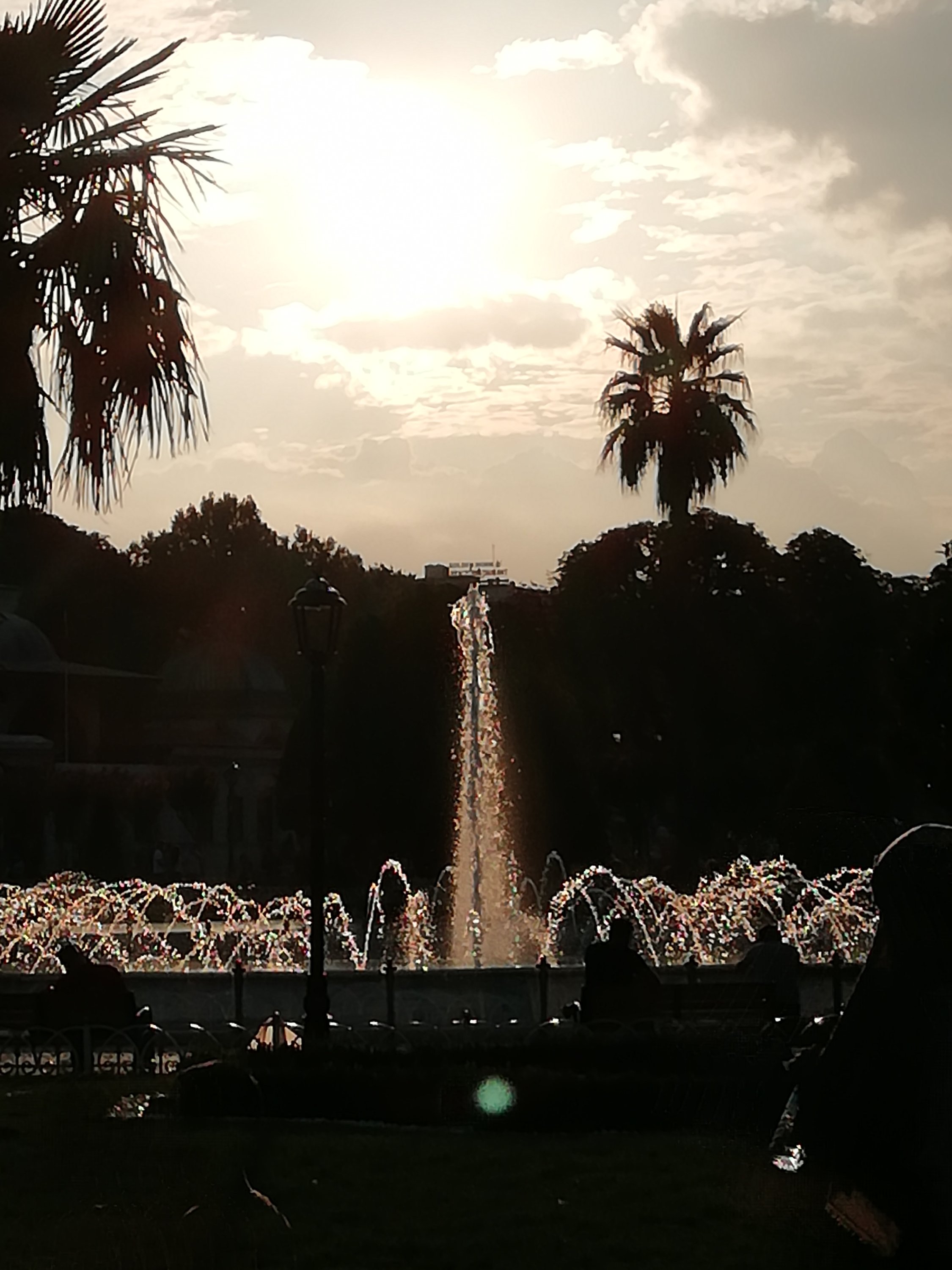
Apart from all the construction, the warm and welcoming atmosphere made Yerevan beautiful. There even was an extraordinary city fountain water display, with light and sound. However, I couldn’t enjoy the experience, because I had just broken my phone while walking there which left me very miserable for most of the day (and to make matters worse, later on I realised that I had left my jacket somewhere behind – given to me especially for the trip by a friend for my birthday) đŸ˜«đŸ˜­.

Armenia is home to many precious and beautiful gems such as the piece I found below:

Yerevan has delicious food – including enormous Armenian pizza, my favourite so far. It was far different from Italian pizza. The dough was hard and crusty while it only consisted of one topping – groundbeef. I loved it so much, I had two of them. Also, I had no idea that ayran (diluted yoghurt) was popular in Central Asia, so it’s good news for me (I can now have ayran every day😏😄).

Our Armenian driver who took us from Tbilisi to Yerevan was even worse than the Georgian driver. It’s a relief that we all managed to arrive in one piece. His attitude didn’t help either. We were having chakapuri and some crumbs had fallen on the floor of the bus and when the driver saw, he went completely mental on us. The driver never told us we couldn’t eat in the bus. We even asked him if we could have breakfast and he agreed.

Anyway.

As part of my English studying, my mum asked me to write a sort of descriptive piece about Armenia… well, Yerevan. I had to include alliteration, onomatopoeia, personification, metaphor, simile, anolgy, satire and hyperbole. See if you can find them. So, here goes.

Armenian Aryan

While at times the sky turned grey and clouds rumbled , at others the sky was full of the scorching sun sending burning rays of light. In which case, the latter seemed the most appropriate opportunity to take a sip of Armenian aryan.

During the day, Yerevan was a transforming city – cranes creaked , metal clanked on metal and builders shouted out orders.

But during the evening, the whole city took a break and enjoyed their best works, including the miraculous fountain. The dancing water was an elegant ballerina, performing their best piece yet. The jet sprays were like fireworks – emitting a whole colourful display of noise and sight . The city was bursting with surprises and entertainment each day.

In contrast, the old city of Yerevan was empty. It was equivalent to your average abandoned park.

But Armenia, they really do have the best drivers. I mean, it’s rather safe for them to be going as fast as they possibly can and swerve around the corners at the last second, even if it is on the edges of a mountain. It makes sense why they should rock their buses or cars when attempting to go over the speed limit. I mean, they’re not breaking the law, right?

Talking of driving, the bus from Tblisi to Yerevan took forever to arrive. Let’s just hope we don’t need to say the same for the bus from Yerevan to Teheran.

Silk Road (1): If Turkey is in crisis, it’s not obvious visiting it

Tags

One year after I left HSBC, and after more than 20 years in the business, I have finally left London with my family to seek other opportunities. We are currently on our land journey to Asia where we plan to relocate for the foreseeable future. That last one year in London went fast into organizing the trip, getting my tennis coaching credentials and actually enjoying time spent with the family. We even managed to squeeze in 6 weeks in our beach house in Italy!

We plan to follow the Silk Road as much as possible without taking any unnecessary risks by visiting certain places along the route. I am typing this at the moment from a very modern and fast train in the middle of Turkey but we started the journey in Italy, of course, the Marco Polo way, on September 1 and stayed for a few days in my home country, Bulgaria. The fact that my parents live one hour away from the Turkish border made the bus trip to Istanbul very easy and convenient. In fact, if it was not that the border crossing takes unreasonably long (due to the fact that Bulgaria is part of the EU and Turkey is not – the incredibly long queue of trucks is a stark warning to what perhaps awaits at the border between France and the UK after Brexit), using Ataturk Airport instead of Vrajdebna Sofia Airport might have been a more efficient option for most people living in Bulgaria close to the Turkish border.

Istanbul is as magnificent as always and as I remember it from visiting it on numerous occasions before both for work and pleasure. In fact, even more so because the ancient history and culture are very well blended with the modernity of the present times: public transportation (bus, tram, metro, ferry) is very efficient and much easier to navigate than many other European cities; getting tickets for attractions is straightforward; even the bid/offer spread in some foreign exchange bureaus is better than some professional retail platforms I used while trading for my own account in London this past year (BTW, best ones I came across are around the Spice Bazaar – that makes exchanging and using physical cash, still infinitely better than withdrawing local currency from a foreign based account or paying by credit card)!

The contrast between ancient and modern is indeed striking when it comes to religion. We were in a small barber shop in Besiktas in which the TV was showing scantily dressed women dancing provocatively on Turkish pop music while the mosque loudspeakers across the street were blaring the daily prayer. The locals in Istanbul still do not get dressed that much differently than the locals of any European Mediterranean country. Are there more women wearing burqas than what I remember from previous visits? I noticed the fully-covered ones but they were mainly in the touristic part of the city and I wonder how many of them were actually foreigners – in fact, London’s Knightsbridge has probably more of them than Istanbul’s Sultanahmet.

If Turkey is in crisis there is absolutely no sign of that in Istanbul… except that everything is much cheaper for a EUR/USD-based foreigner. And when it comes to the service industry at least, Istanbul is no different than London, for example: most of the personnel is foreign. Reality is slightly different than that, of course, for just like London is not a good representation of the UK, Istanbul is not one of Turkey either.

We crossed the whole country west to east all the way to the border with Georgia. We saw small villages and bigger towns. Especially in the villages we would struggle to see women who were not covered. Not the burqas that we know but the square headscarves. But then again, the reality is not that dissimilar in many villages in Bulgaria and even in some European Mediterranean countries: I feel this is more a question of generations’ customs than religion.

Our journey across Turkey was mostly by train. In fact, we are doing this trip the ‘old-fashioned’ way, the way I remember my school years: a backpack, hostels, and public transportation as much as possible. I want to see these countries not through the eyes of the Ministry of Finance or the central bank, which is the way we used to do it in the business, but through the people and their daily lives. I also want my kids to understand how privileged and lucky they have been so far.

Istanbul-Ankara was a modern, fast train with Wi-Fi and all the amenities. The train station in Istanbul, strangely enough, was just two tracks one hour away from the city center. Ankara’s one, on the other hand, was a modern spacious building, resembling more Heathrow T5, but right in the center of the city.

Ankara-Kars is an overnight train, slower and less modern (no Wi-Fi) than Istanbul-Ankara but better than London-Glasgow (friendlier service, fridge with complementary food and drinks and slippers!), for example (compared to when I last did that journey about 5 years ago). We used the time on the train to just look out and reflect. In fact, we did this for hours and we did not mind because it brought back memories from when we used to do that kind of travelling with our parents on long journeys. When I say ‘we’, I meant I and Georgia. Our kids’ attention span is infinitely smaller and their idea of entertainment profoundly different. Not that there was much of it (they do have to study on our trip) but they had to constantly be reminded to leave the digital distractions so easily available to them.

The one thing that stuck me while passing through the interior of Turkey was the heavy presence of the military: there are military barracks literally in every town we passed. Kars, itself has a few. We arrived late in the evening and while walking to the hotel we merged with the backpackers’ ‘crowd’. Kars is the eastern-most large city for visiting Georgia and Armenia (latter indirectly as the border is closed). There is heavy influence of either Armenian or (further northeast) Georgian culture. If you are looking for a financial or economic crisis, you are not going to see any traces of it in Kars either.

The drive to the Georgian border was through what I can best describe as the Switzerland of Turkey: the landscape changes from flat arid land to picturesque mountains literally immediately. The Turkey-Georgian border crossing would have been straightforward too if it was not for walking in no man’s land for half a kilometer under torrential rain (and make-up cover). By the way, the queue of trucks waiting to cross the border was at least twice longer than at the Bulgaria-Turkey border crossing.

Georgia on my Mind

I would like to say that Georgia was named after my mum because it is a beautiful land. 😘 Shout out to my mum.

I particularly felt the landscape of Batumi was gorgeous. It was relaxing to ride along the Black Sea on a scooter by myself and seeing the futuristic-like buildings. This may be one of the places I will consider living in for some time. I already have an idea to own a nice house by the side of the Black Sea and to take out the scooter every morning.

I really liked Batumi. But soon enough, we were on a train to Tbilisi.

Both the apartments we rented in Batumi and Tbilisi while in a central area which looked so rundown that walking around didn’t make me feel safe. Thankfully, once inside, they were modern and nicely decorated. It made me wonder if they left the area to decay to turn away the robbers.I

Saying that, on arriving in Tbilisi I almost felt I was in New York again. It has tall buildings, wide lanes, lots of lights and car noise.

The next day, a friend of a friend kindly gave us a tour around, all the way from the old capital of Georgia to the best balconies with a view, and to old Tbilisi.

We also went to the Bath of the City which, although it reeked of rotten eggs (sulphur–which has healing properties), was also very elegant. At the end of it, there was a waterfall. This was very special, because what other city has a waterfall in its centre?

Flashback to our arrival, a few evenings ago. It was pouring. Literally. When we were in no-man’s land, past theTurkish border walking towards the Georgian border, the rain was so strong it made puddles on the ground. Security had to put planks of wood for people to walk on. And that was only indoors. Imagine outdoors.

Once we officially arrived in Georgia, we took a minibus to the apartment. The vehicle was packed, so we had to stand for half an hour. To make matters even worse, the driver was absolutely crazy. Italians are the worst drivers? Pfffff. Come to Georgia, people.

That’s the worst you can get, right? Nope.
We were drenched and we were wearing these waterproof covers, and they were drenched. We were all standing and I had to hold on for the sake of my life, to avoid being thrown across the minibus. One passenger, on her phone, sitting down, wanted me to move, because the waterproof cover kept going in her way. She didn’t ask me. She pushed me, although gently. I’m sorry, but I’m trying to hold on. I didn’t realise that your priority was scrolling through Facebook on your phone. Hmm. Selfish!

Turkey : The Country, not the Bird

Dude.

Animals need to stop crossing the road.

Seriously.

I witnessed a number of geese and cows (separately) crossing the road on our way to Georgia.

So, Bulgaria – two chicks and a rooster.

Turkey – several geese and cows.

What next? Pandas in China?

Talking of chickens, they keep showing up. It was devastating to see one squawking in the hands of a man taking it to the market😭.

Poor chicken 🐔.

But that was in Kars. Instanbul was beautiful. No doubt about that.

The picture above was taken at the fountain in front of Hagia Sophia, a former church which was destroyed twice, rebuilt and converted as a mosque after the fall of Constantinopolis. Now, Hagia Sophia is a museum.

Its neighbour, the Blue Mosque (named after the predominant presence of the blue and turquoise tiles) was the first mosque I have been in.

Once in Kars, we also visited an orthodox Russian-built church converted into a mosque – which makes it the only one with such architecture in Turkey – or so I’ve been told.

So by now I’ve reached the conclusion that I prefer mosques to churches. The latter are so serious and so quiet while the former are loud, playful and as a bonus, have comfortable carpets.

We also went to see the Basilica Cistern (an underground water cistern from the Roman times). It was quite creepy, walking through the passage surrounded by the dark. The music didn’t help either. To be honest, I didn’t really care about the building, but I was curious to see the two carved Medusa heads, of which the story still remains a mystery.

It was interesting to see the culture of Turkey through my own eyes.

For example, while I’m not a religious person, listening to the call of prayer from the mosques was satisfying to my ears.

Even more fascinating was watching two restaurants in a battle of convincing passers-by to stop and eat. I couldn’t help but feel pity for the vendors in the Spice Bazaar and the Grand Bazaar when my parents refused their offers, but both my mom and dad found that perfectly normal. They grew up in a Mediterranean environment, so they must have been used to it.

The same goes for the sight of all the homeless dogs and cats stranded in the streets. This was not a common sight in London and it was soon enough that I was informed of the ugly truth – a lot of animals found on the streets of London were slaughtered.

Probably though, the first amusing encounter to the foreign culture was already on the bus from Haskovo to Instanbul.

Approaching the border of Bulgaria, you could see a lane going for kilometres full of trucks waiting to get into Turkey, as shown below (my parents were commenting on how this will become a common sight on the UK/France border once Brexit happens).

The locals have thus found ways to trade making do without the red tape of customs. As you are allowed to bring one bottle of alcohol per person into Turkey, the bus hostess was then going around asking the passengers if they wouldn’t mind carrying a bottle each for her. The bus then duly stopped before the border at a big discount store to buy the extra alcohol 😂.

Other (very) relevant things about Istanbul were:

– Even as we approached with the bus we couldn’t help but notice the amount of mosques all around.

– I finally had my hair cut in Besiktas! We walked into a minuscule shop (2*0.5mt max) where the barber – sitting in a chair, scrolling through his phone, seemed relaxed . He did his job well.

– One day, we tried to take a ferry back to the hotel area. While no-one at the station understood English they gestured us into one when my father showed them our destination on Google Maps. It turns out the ferry was going in the opposite direction. We had no choice but to wait on the ferry till it came back to its departure point. By then there wasn’t a ferry that could take us back to Sultanahmet. On the other hand, this gave us a chance to see the Bosphorus up close at sunset. And it was really beautiful.

That was all our time in Instanbul. But we weren’t finished with Turkey yet.

We took a train from Instanbul to Ankara. The train was very modern with a secure WiFi connection, so we were equipped for the three hours ride ahead 😎.

This wasn’t the case for our next train, Ankara-Kars, which not only was clearly past its prime but also had no WiFi connection. This was a tragedy, considering we were going to be on the train for 25 hours. So we were going ‘old school’ .

But more of this later. First, a bit more about Ankara. We had only two hours before taking the overnight train. Still, we managed to explore the nearby park and fill our parents ears with the chant “It’s not fair! Take us to the fair!” (Gençlik Park has a big permanent amusement park).

We stopped, however, at a park cafe for gyuzleme, ayran, and ice cream. I finally tried Turkish ice-cream! It feels like bubblegum. Very elastic.

While eating, few children startled me by coming over to our table, pleading for food. I had never experienced that. I was surprised and sad. But it turns out this is quite a common practice in Turkey and does not necessarily mean that they are starving.

Indeed, later on, at one train stop, a huge crowd of children came running towards the train, literally on the tracks, asking for food, drinks, toys, anything. Passengers on the train actually started throwing snacks and drinks out of the windows (I saw one kid happily holding a massive bag of Doritos).

This reminded my father of his past. Since he spent his summers in the village of Dobrich (which is really close to the border with Turkey) some of his friends would go with their bikes to the gas station where Turkish trucks stopped. The drivers would gift them with all sort of items but particularly prized was a special type of chewing gum which would contain stickers of fancy cars. They were called ‘BeepBeep’ and the kids would collect them and trade them as a particularly prestigious possession.

But enough digressing, back to the overnight train. I was ecstatic at the sight of our room – a folding couch, a bed, a fridge full of complementary food and drinks and free slippers. The lack of WiFi meant me and my family looked around and reflected on our trip.

So, I, Eliano Tonev, am proud to say I survived a whole 25 hours without WiFi.

In Kars we arrived late and left early. We still clocked in few interesting sights (among others the Kars castle, which I recommend to be called the ‘Karstle’) before heading into a taxi and driving all the way to Georgia.

By the way, the longest word in Turkish literature is composed of 70 letters. We all tried to pronounce it in one go, but we couldn’t. Can you?

Whew. That is one loooooooooooong post.

Bulgaria : The Chicken crossed the Road

Q: Why did the chicken cross the road?

A: To get to the other side.

I know, because I’ve seen it.

We were on our way back from Perpirikon, a temple erected to honor Dionysus (Greek form) / Bacchus (Roman form), God of Wine. A rooster🐓 and two chicksđŸ€đŸ„ were making their way across the road. They seemed to not like paparazzi, because they were going too fast for me to take a picture 😑. Hopefully, they will decide to pop out again during our road trip.

Flashback two hours before.

We stopped first by the Stone Mushrooms (and posed for pictures!) and later made our way up to the Perpirikon temple.

It was the Thracians who first built it around 3000 BC. When around the 7th century, a tribe called Bulgars came to the land of the Thracians (from the steppes of what is currently Kazakhstan – our road trip will go through there!) with never – seen before tamed wild horses, the Thracians were forced to sign a peace treaty with them. The temple remained and Perpirikon even holds traces of Roman construction.

While the sun was scorching and the ascent was steep, it was a beautiful view and it was fun climbing over the mismatched rocks.

Being in Bulgaria for a full four days also allowed my grandparents to teach me the Cyrillic alphabet, which not only was fun, but made the Bulgarian language a lot easier to read – considering this is the official alphabet of the country (try to read this: Đ•Đ»ĐžŃĐœĐŸ).

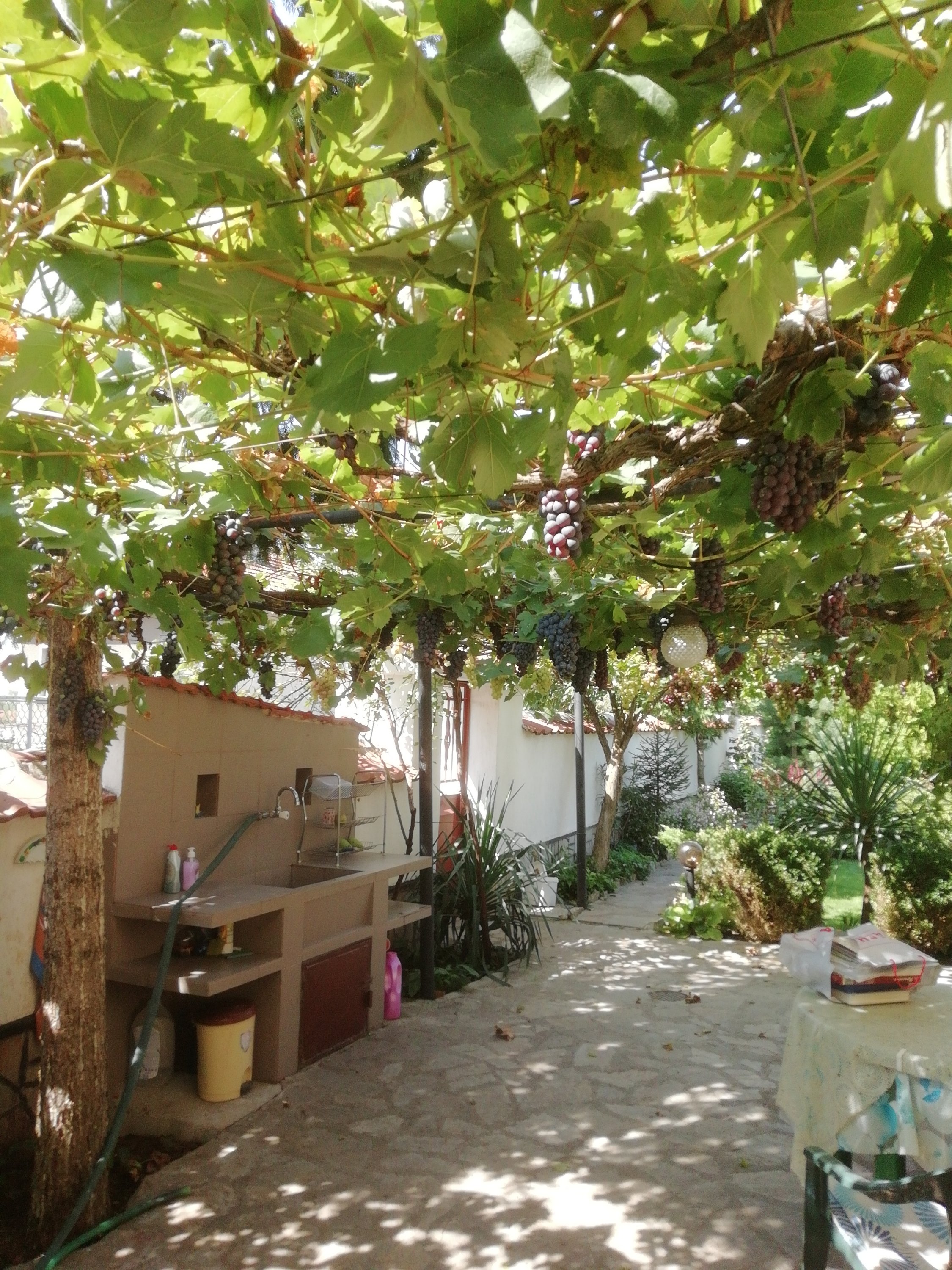
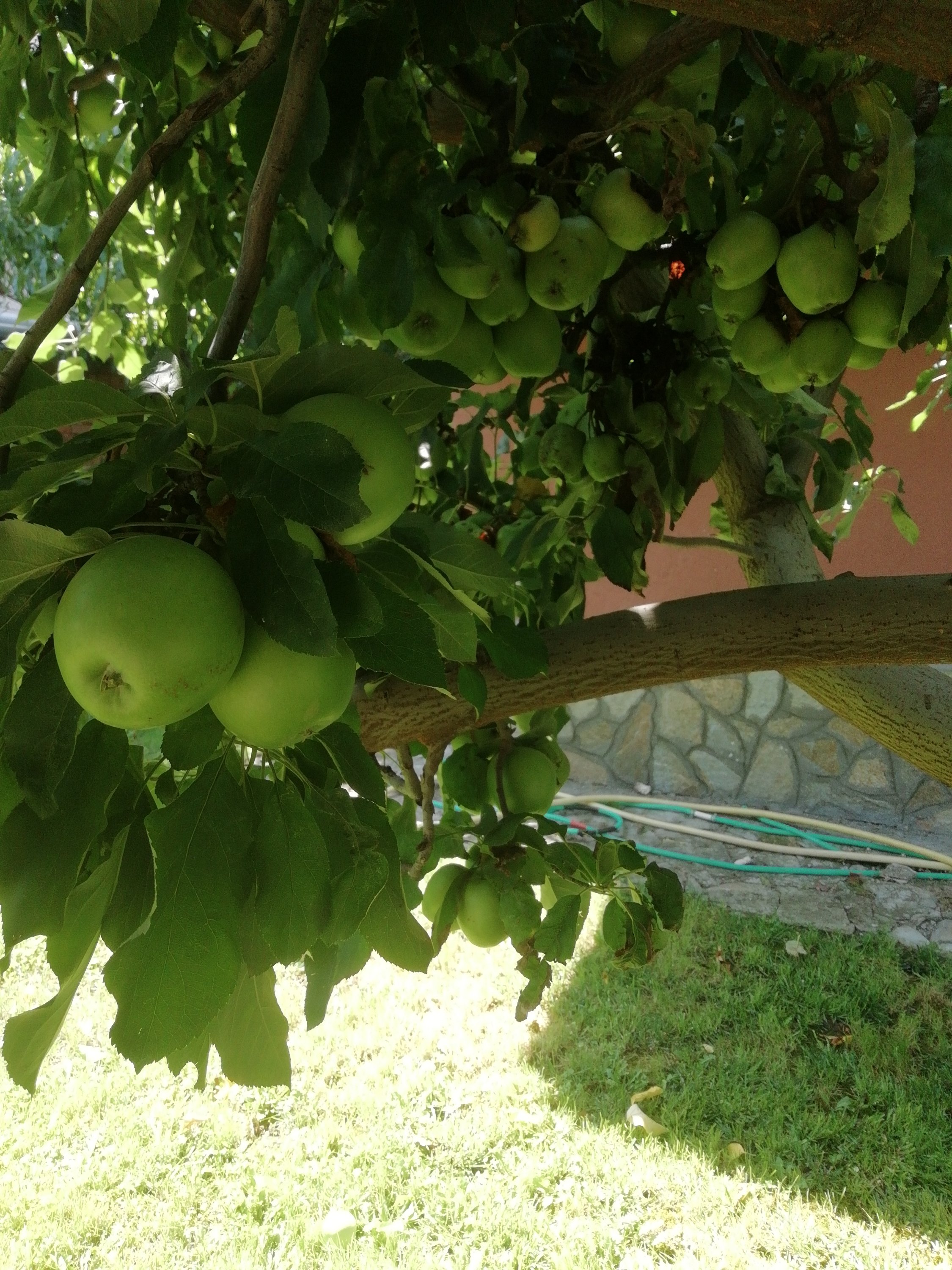
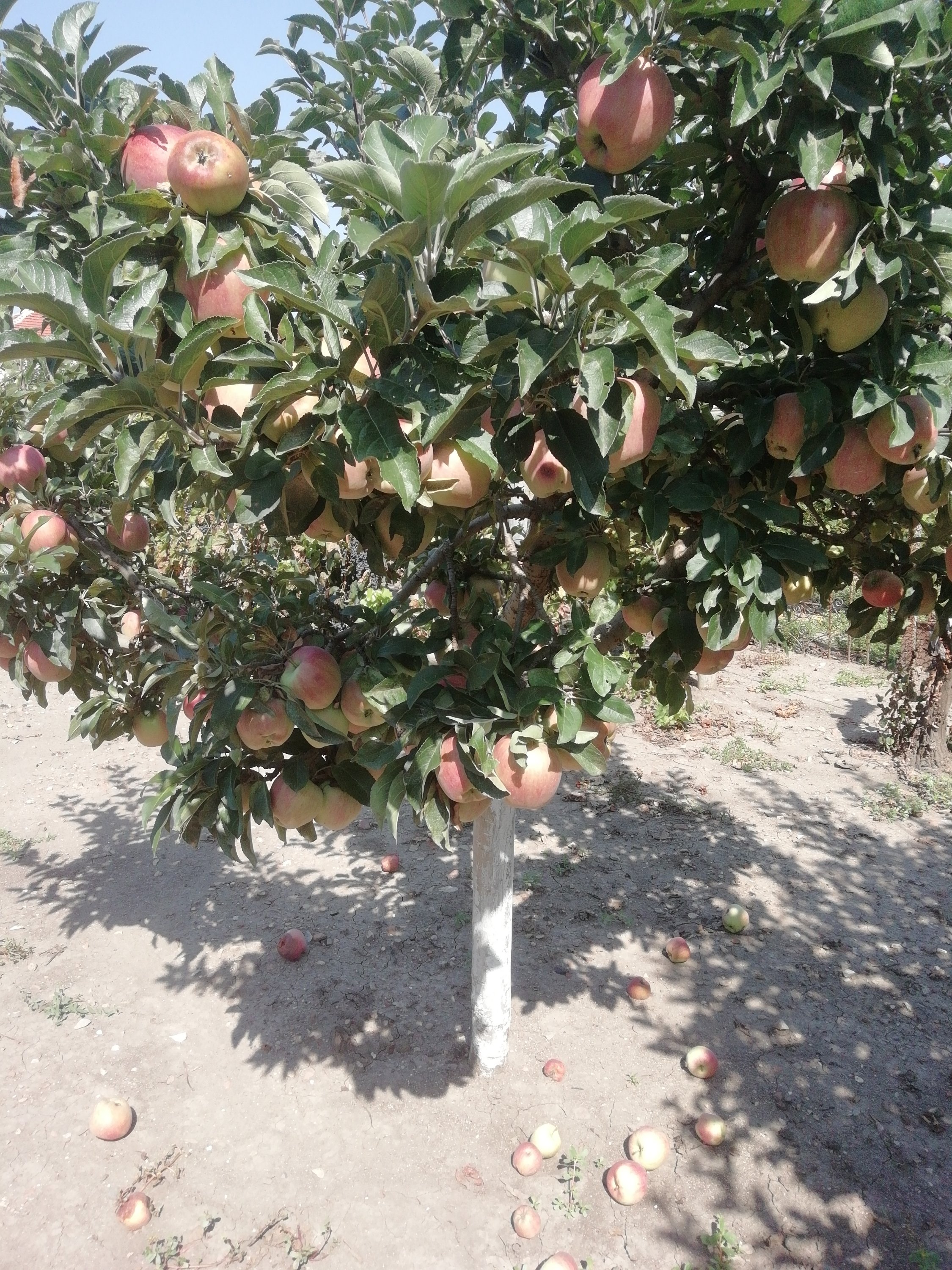
Baba and Diado have their very own orchard. When I first arrived in the village of Dobrich, I noticed a bunch of grapes my grandparents had grown, hanging from the trees. While walking around, I noticed all the growing apples, pears, peaches, plums, strawberries etc. That seemed a bit unusual to me. I realised how accustomed I was to city culture. I was so used to going to the shop and picking out fruit from there.

One evening, we made our way to Dimitrovgrad to visit the fair celebrating the 71st anniversary of the foundation of the town. My father grew up there before he left for university in America. Here’s a little interesting history.

Dimitrovgrad is the youngest city in Bulgaria, founded in 1947, named after Georgi Dimitrov, a communist leader. This was just after WWII ended. In the years that followed, a lot of places changed their names to honor famous Bulgarian communist leaders or events. When the Berlin Wall came down in 1989 and with that, the end of communism, all those cities converted to their previous names, except for Dimitrovgrad, as it had no previous name. The new government still wanted to remove any memories of communism, so they took down the statue erected in the centre of the town in honour of Georgi Dimitrov.

London. Check.

Italy. Check.

Bulgaria. Check.

Next stop : Turkey.

By the way, did you guess it was my name written in Cyrillic?

Oh yeah, I also saw a chicken cross the road. Did I mention that?

On the Silk Road (2)

Over all my fourteen years, London was fun. I’ve had many exciting experiences that I know I will never forget.

It was a struggle to say goodbye to our flat back in London. It had been my home since the day I was born (literally – I was delivered in the main bedroom). Flat 3 has always been with me, through thick and thin.

For my secondary school, it was a different matter. Pretty much the only thing I will miss from there are my friends.

But I don’t think I will ever struggle to say goodbye to anything more than VillaGea. This house was a pure luxury, something I couldn’t wait to visit every summer.

Not only VillaGea has everything you could ever wish for – a massive trampoline, a footsball table, a Ping-Pong table, a wide variety of balls (ranging from footballs, basketballs and volleyballs to beach balls, squeeze balls and exercise balls), a huge collection of toys and a form of entertainment available at all times, but it also holds many memories – including sleepovers with friends, barbecues with families and late-night karaoke.

However, above all, the house has its very own front-row seat for the beach. That is something extremely extraordinary. How else can you get the beautiful experience of waking up to the soft crashes of waves against the shore? How else can you get the opportunity to sit on a deck chair in the veranda, watching the sunset? How else can you get the chance to have a midnight swim on a whim? The sea was basically my own massive swimming pool. So yeah, it was a struggle saying goodbye to the house of many glorious memories.

Still, as the summer eventually ended, the trip of a lifetime started.

The first stop is the village of Dobrich, Bulgaria. We took a flight from Rome to Sofia, before jumping into the car to drive all the way there.

The time in the car allowed me to relish the sight of Bulgaria’s landscape that I had not seen in many years. When I was younger, I used to come to Bulgaria a lot to visit Diado & Baba. While in the car, it occurred to me, that throughout all the years I hadn’t visited, I still had vivid memories.

I had missed Bulgaria. That was as much as I could realise. So here I am, back in one of my childhood homes.

On the Silk Road (1)

Tags

This is it.

This is where it all begins.

The trip starts now.

A while ago, my parents suggested relocating to Southeast Asia all the while travelling along the Silk Road. At the same time, I had been accepted into the BRIT School for the performing arts and technology. Both were an opportunity of a lifetime – I didn’t know what to feel.

Forward one year later, and here we are. I still don’t know what to feel.

Today we are leaving from our holiday house – Villa Gea – in Italy.

Next stop: my father’s homeplace in Bulgaria, the village of Dobrich.

Share buybacks must be seen through the shareholder primacy doctrine

Tags


  • Buybacks are a direct and natural response to the shift in corporate management structure in the late 1970s which ushered in the period of ‘shareholder primacy’. It was Rule 10B-18 in 1982 which legitimized them.
  • Banning share buybacks without also changing the focus away from maximizing shareholder value will accomplish little because companies will simply find other ways to reach that objective.
  • The 1970s were a tumultuous period for the global economy with the two oil crises leading to stagflation and to enormous pressure on corporate profits. But the ground was set already in 1970 when M. Friedman published “The Social Responsibility of Business is to Increase Profits”.
  • In 1976 M. Jensen & W. Meckling published “Theory of the Firm: Managerial Behavior, Agency Costs and Ownership Structure” which explored the idea of equity-based compensation for professional managers.
  • Finally, six years later Rule 10B-18 provided safe haven for companies to buyback their shares, allowing them another option to reward shareholders, in addition to dividends. The results were explosive.
  • Equity-based compensation rose from 0% of the median executive’s pay in 1980s to at least 60% in the 2000s; just in 1983, the aggregate amount of cash spent on share buybacks tripled and by 1985 it was 5 times higher than the average in the period 1972-1982.
  • With the incentive structure thus created in the 1980s, companies NOT doing buybacks would not be fulfilling their objective of maximizing shareholder value, notwithstanding that managers are also large shareholders.
  • Thus, banning buybacks makes no sense as it goes against the shareholder primacy doctrine unless, of course there is solid evidence that buybacks erode long-term shareholder value. So, therefore, the issue is not with buybacks but with the corporate management structure which has emerged since the 1980s.
  • Profit maximization and focus on shareholders has created extremely efficient companies boosting aggregate supply(AS), in many cases at the expense of aggregate demand(AD) at home, thus forcing those same companies to shift sales increasingly abroad.
  • It has also contributed to the concentration of both companies and shareholders, the former leading to the monopolization of US industries, the latter to US inequality->continuing with the shareholder primacy thus could indeed be damaging to corporate profits long terms once AD dries off even in EM.
  • I think it is difficult if not impossible to gauge the size of the effect of share buybacks on stocks prices or EPS, but there is no doubt that there is one: JPM, for ex. thinks effect on EPS growth is less than 10%, UBS thinks it is more than 30%.
  • Fed’s Z1 Flow of Funds reports a break-down of the major equity buyers each quarter: since 2008 corporates buying back their shares is absolutely dominant; the second biggest ‘buyer’, ETF, is three times smaller; pension funds and households net sold equities during that period.
  • The stock price of profitable companies like Apple should be rising on its own merit , but that does not negate the possibility that buybacks ‘juice up’ stock prices even higher than ‘justified’. It goes the other way too: with 22 consecutive quarters of declining revenues the stock price of IBM probably should  be lower -where would IBM stock price be if not for buybacks?
  • If we are adjusting R&D to GDP, we might as well adjust share repurchases to GDP as well (and yes, they are also at record high). Tech companies raising their R&D – that’s great – but if they did not do any buybacks, could they have raised it even more?
  • The recapitalization argument (shifting from equity to debt refinancing) is probably the most logical argument in favor of buybacks, if it was not for the agency conflict of interest (managers are equity holders) and the fact that they could have also boosted dividends instead.
  • The argument that giving money back to shareholders could boost wages and investment somewhere else (therefore, where is the problem?) – yes, it could – but as far as I am aware there is not much evidence of this.

Domestic vs. foreign capital flight in EM

Domestic capital, rather than foreign capital, flight is the bigger issue for most EM now

A country with a small domestic capital base has little choice but to borrow from ‘strangers’ (Wynne Godley’s sectoral balances approach) and thus be subject to foreign capital flight whenever (foreign) interest rates rise and/or the external BoP situation worsen considerably. The inevitability of this outcome, of course, leads to the boom and bust scenario we have been so used to in EM in the past. Monitoring US economic business cycles and local external debt statistics, current and capital account balances, FX reserves, etc., becomes essential for forecasting local currency value.

However, as the EM middle class has progressively grown for the last two decades, so has the domestic capital base, and so has the importance of monitoring what the locals are doing with respect to their savings and investments. There is, therefore, also the case of domestic capital flight, which is much more difficult to quantify as its causes are much more subjective.

EM countries have responded to this development by gradually shifting to borrowing in their local currency. Thus, the ratio of local debt to external debt in EM has risen. In many cases, however, the growth of local government bond instruments has not been fast enough for the growth of the domestic capital base. Traditionally, locals have invested in real estate and some equities. If local financial markets remain underdeveloped relative to the growth of the domestic capital base, with fewer domestic investment options available, there is a bigger incentive for capital to search other investments in foreign currencies.

In addition, the larger the domestic capital base, the bigger the risk of domestic capital ‘flight’ if locals start fearing that a currency depreciation is forthcoming. In this case, money does not need to necessarily leave the country; all it takes is to be deposited in foreign currency in the domestic banking system, thus not directly available for local currency lending. For example, the level of dollarization in both Argentina and Turkey is quite high (more than 50% of all deposits are foreign currency denominated).

Finally, some locals can decide not only to convert their savings/investments in foreign currency for the reasons above but also to take them out of the country. This can happen if they also fear ‘currency appropriation’, i.e. they believe the local institutional framework is inadequate to protect their assets. For example, in 2004 Argentina decided to pay local foreign currency deposits in pesos at an exchange rate which had nothing to do with reality. There have been also many occasions where governments have re-possessed real assets (real estate or productive assets, like factories, resources, etc.).

So, a growing domestic capital base combined with an underdeveloped institutional (financial, legislative) infrastructure increases massively the risk of domestic capital flight. For a lot of EM countries currently, the case can be made that domestic capital flight is a bigger issue than foreign capital flight at the moment. How to monitor this is not that obvious though. The IMF measures reserve adequacy ratios taking into account domestic money supply, imports, external debt and other external liabilities.

The case of China and Russia

In a wonderful blog post, Brad Setser addresses the issue of how much FX reserves a country needs using this IMF framework. I do agree with his reasoning that, applied broadly, this measure tends to overstate the FX reserve adequacy ratio in some BoP surplus countries and understate it in others (large external debt borrowers). However, I do not think it is that straightforward. For example, China falls in this unique category where, despite running a BoP surplus there is a bigger risk of domestic, rather than of foreign capital, flight and the IMF measure rightly implies so.

China also has the largest single country FX reserves position. In addition, it has very little public foreign debt (though it does have a lot of corporate foreign debt). By these measures, it does look like China has more than enough of FX reserves. However, China also has a very large and growing domestic capital base, an underdeveloped financial markets infrastructure (few domestic investment options) and untested institutional framework, which are the main ingredients for a potential domestic capital flight. Indeed, we saw the risk of capital flight in 2016 when, despite of the capital controls, a lot of money found its way out of the country for the reasons mentioned above.

It will be a big test for China once it lifts its capital controls. Obviously, the level of FX reserves is extremely inadequate to keep the Yuan stable if even a small portion of the domestic capital base decides to convert to USDs. In fact, if other EM countries are an example, the prospects are not bright.

Russia experienced massive capital flight between 2006 and 2015 despite boasting higher CA surplus, higher FX reserves to GDP and lower foreign debt to GDP than China’s now. These good economic numbers were irrelevant to stop locals from converting their domestic deposits into foreign ones in the face of an untrustworthy domestic institutional framework. And despite more than seemingly adequate FX reserves, the RUB depreciated as a result.

Conclusion

So, is the IMF overstating the adequacy of FX reserves for BoP surplus countries but with large domestic deposits? It depends on people’s perception of how trustworthy the domestic institutional framework is (and what, therefore, the prospects for the currency are) and what domestic investment options are available. On the other hand, is the IMF understating the importance of bigger FX reserves for countries with large external deficits? It depends on people’s view on how high foreign interest rates could rise.

It is much more difficult to quantify the risk of domestic capital flight, and once it starts, it is also much more difficult to reverse it. On the other hand, one could say that the risk of foreign capital flight is not only smaller now, because developed markets terminal rates have been steadily declining, but also the recipe for reversing it is also more obvious – raise domestic interest rates to offset the rise in developed markets interest rates. I therefore think it is better to lean on the side of caution and allow for larger FX reserves relative to the domestic banking system for those EMs with a weaker (and untested, i.e. capital controls about to come off) institutional frameworks.

A much more efficient solution, obviously, would be to develop the domestic financial infrastructure, something which China has indeed been doing in the last few years.

From golden fetters to debt shackles

It is the prerogative of the state to issue money. In the past, some states did it better than others: Roman Republic, Song China issued money in line with economic expansions and under the checks and balances of a solid institutional framework. During the Dark Ages, however, European states issued money to fund disastrous wars waged on the back of economic stagnations. The gold standard, introduced in part to limit the state powers in monetary affairs, did exactly that: it severely restricted the flow of money to the availability of gold, thus cutting the wings of any economic expansion.

When the Bretton Woods agreement in 1971 eventually put an end to the gold standard, and fiat money finally became the norm, governments, however, chose to delegate that function of money creation to their banking system: banks could issue new mediums of exchange only in the process of also issuing debt. This was a massive improvement over any monetary transmission mechanism of the past because it linked money creation directly to economic activity (assuming that the debt is used to fund projects leading to economic growth).

So, it worked well at the beginning: debt levels were very low to start with, the financialization of the economy in the 1980s made it much easier to obtain new debts and the 1st Digital Revolution made sure there were plenty of good project to fund. However, even that was not bullet proof: the system was set-up by default to encourage the creation of debt so that money is created. However, with good projects to fund becoming scarce, funding moved to less productive endeavors: junk bonds in the 1990s, mortgage debt in 2000s, and the pinnacle to top it off, corporate debt for share buybacks in 2010s!

With debt levels high and continuing to rise, how high can interest rates go before they nip the whole process of money creation in the bud? We had a glimpse of that post the S&L crisis in the early 1990s which eventually gave rise to shadow money; we had something similar post the 2008 financial crisis when debt deleveraging gave rise to crypto money. Both shadow and crypto money were designed as substitutes of the medium of exchange which had gone scarce as debt origination slowed down. The problem with that is, because they are not regulated, they do not carry the safety/convertibility features of inside money and thus at some point the whole process badly backfires.

In a sense, we ended the gold standard, only to put the monetary fetters back using debt as the anchor. Even though this process was an improvement, it is questionable, however, whether the banking system has done a better job than the state would have done, if it had taken full advantage of the fiat monetary system post 1971.