China Part Two: My TED Talk (Deep Analysis)

!! ⚠️ CAUTION! MAY CAUSE EXTREME BOREDOM ⚠️!!

YOU’VE BEEN WARNED

OK. *breathes in*

Let’s do this.

We only spent around 4 weeks in China, but by then, I had noticed some recurrent behaviour traits:

– Ill manners: rudness was pervasive. It was present mostly at train stations: I was shocked to see grown-ups fighting like children, pushing past each other to get on the carriage and to grab a seat, even before others had gotten off. So, most of the time, we ended up standing in the carriage. I watched other passengers to see if this bothered them, but they turned a blind eye whenever this happened. It must be cultural norm, I then thought.

Similarly, in the Forbidden City, Beijing, which was incredibly busy, people were always shoving past each other to take a picture. I almost dropped my phone on several occasions, which would have been a disaster, since I had just repaired it (in Xi’an😄).

– Littering: The Chinese government seems to buy into some basic environmental policy by providing lots of bins and cleaners everywhere, even on the station and running trains! Unfortunately, the citizens don’t seem to share the same environmental concerns and regularly disregard any common rules on disposing of garbage or personal fluids.

We witnessed many examples of this. A particularly amusing one, for me, was on the tube where a young boy eating a chocolate bar subtly dropped the wrapper under the seats and pushed it away with his leg. Apart us pointing and chuckling no one else seemed bothered.

Unfortunately it wasn’t just big city behavior. While descending down the Yellow Mountains a man, ignoring the bin situated right by his feet, threw a bottle deep down the cliff, left to decompose for eternity. In the same countryside experience, people were smoking in non-smoking areas (while, in smoking areas, even though there were plenty of people, no-one was smoking!).

Generally speaking it was also hard not to witness constant relieving of personal fluids. People seemed unfussy about opening their zipper and urinate whenever nature called. Also, my mum had warned me of the cultural habit of spitting and I’ve been wary since then. Once, at a cafe, after seeing a man outside the window spitting all over the ground I made sure I kept track of where it went so that, when we left, I avoided the spitwads. After that little episode, I noticed that every now and then, somebody would lean over and dispose of their saliva.

To be honest, by the time we ended up in Beijing I grew quite disgusted with the amount of people spitting and littering. It really hit me at the Beijing stadium where Coke cans and tissues were strewn across the grass.

– Aseptic nature: It looks like the Chinese government also feels responsible for taming nature to fit neatly into an health and safety proof entertainment.

This was evident in the Yellow Mountains again. All throughout the walk, we were accompanied by built-in stairs and handrails which seemed completely at odds with the idea of mountaineering. In addition, a service of a chair manually carried was offered. I mean, it would make sense if there was a real necessity but I witnessed a young child carried on the chair, while playing on his phone (and people complain that the new generation are too lazy! Maybe that’s due to the naive parents who turn their head away when their children sit on the couch, watching TV or play video games all day long) .

In the Gobi Desert we encountered a similiar approach. Planks of wood and handrail were built across some of the dunes! We, of course, took the longer and fun way up, old school, climbing up the sand, barefooted.

The Silver cave at Yuangshan, an impressive work of nature on its own right, had also been subject to the beautification process. Man-made lights were set up to make the cave seem so much more dazzling, but it felt unnatural and artificial, because it removed the sense of nature’s accomplishment and replaced it with what human civilization has made.

I reminiscented of the days where we would hike in the countryside in Britain. The most civilised works would be the gates to keep out the aggressive cows.

I personally found it hard to enjoy the works of nature when works of humanity were clearly present, begging for attention.

– Friendliness (or lack of): Overall, in China, people’s attitude towards foreigners seemed either extremely unfriendly and unhelpful oral as extremely friendly and generous. We were lucky enough to encounter some of the latter. Random people offered us their help and some taxi drivers did try their best to understand us and get us to our destination (even though they often struggled to understand the Western name of the place we wanted to go to).

China may get plenty of tourists, but we still attracted many curious locals. Once, in Dunghuan, we stopped by a restaurant owned by a family with two boys. The children, who were studying late in the night, were particularly curious and we developed a bond and had a great conversation. They even taught us how to hold chopsticks properly, which was a relief, because since then it wasn’t such a struggle to eat food.

It also became obvious to me that the Chinese have a little pet peeve about loose laces. Every now and then, my shoelaces would undo themselves and a random stranger on the street would pat me on the shoulder and gesture to my shoe. Once a man even went as far as lifting up one leg while walking to point at his own shoe (since he probably couldn’t speak English) and gesturing to me. Another time, I was playing with my sister and this woman shouted across the entire room, frantically pointing at my undone shoelaces. And no, I’m not exaggerating.

– Cuteness: Another thing that perplexed me was how the society was eager to educate children through cartoons. For instance, short clips of safety were presented on the TVs in the trains. I can see why it makes sense though, because these children are going to be the next generation – among the cluster of kids, included a future president, teacher, soldier, doctor. These were going to be people who could possibly change the course of history and the Chinese society is determined to bring the best out of them.

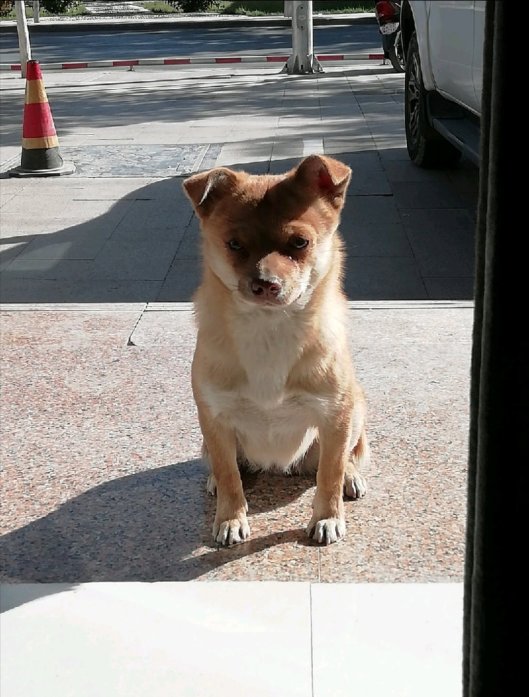
Moving on to Dunghuan, I spotted a cute dog on the streets. Many were present throughout our journey on the Silk Road and they were all homeless. So, I was wary about stroking it, but it was still a cute animal. We had carried on walking and then I realised the dog was following us. At some point, we were inside a shop buying breakfast and the dog was waiting outside for us. Here’s a picture to show just how adorable it was.

The dog followed us the whole way. Unfortunately that day we were leaving to go to Zhangye so it broke my heart to see the dog scampering after the car we drove away in.

I wonder if it will ever think about me.

– Spices (and crawlies): If there’s one thing that was common in China, it was spices. The pungent substances were everywhere. Almost every dish we ate had spices. Plenty of shops in the market were selling spices. What would be a lot of spice to us would be very little spice for the Chinese. In addition, in Beijing, I spotted some live baby scorpions on a stick sold as food, which totally freaked me out. Even now (writing this in Myanmar) I shudder at the mere thought of these tiny animals squirming and wiggling.

To conclude: while China does offer excellent sights and polite locals, littering, smoking and spitting is present almost everywhere and you are bound to be shoved by people, adamant to get on the train. It was an experience like no other and I wonder if I will see things differently when (and if) I return to London.

And that’s China for you, folks.

*curtains close*
*applause*

Is Boeing giving too much money back to shareholders?

Tags

Has Boeing invested enough in R&D? Could investing more instead of returning money to shareholders in the form of share buybacks and dividends have prevented the faulty automated system which supposedly was the cause of the two most recent fatal crashes?

  • Boeing’s share price has risen more than 250% over the last 5 years. The DJI, of which Boeing is a part of, has risen about 60%; the S&P Index has risen about 50% during that period.
  • Boeing has bought back a total of $39Bn of shares over the last 5 years which is actually just about half of the authorized amount. The 2018 share buyback payout ratio was about 76%. The share buyback has increased by 50% over this period, and at the moment it is one of the largest among US companies.
  • As a result of the share buybacks, Boeing’s share count has been reduced from 767m in 2013 to 586m in 2018, or by about 24%.
  • Over the same period Boeing has spent about $17Bn on R&D, about half the amount spent on buybacks; R&D spending has been flat in the last 5 years.
  • Top-line revenue growth over the last 5 years is about 3% per annum which fades in comparison to share price growth, or EPS growth (see below).
  • Bottom-line EPS annual growth rate, on the other hand, is about 24%. There is no doubt that this is a consequence of decreased share count (see above) simply by logical deduction. However, it could also be as a result of reduced costs (of which employment still is the largest, see below). Either way, both causes can be seen as a temporary phenomenon and not good for the company’s long-term prospects.
  • Boeing has reduced payroll by about 10% over the last 5 years, despite total US full-time employment rising by 10% over the same period.
  • Boeing has increased its dividend by 325% over the last six years. For 2018, its dividend payout ratio was 39%, which makes the total payout ratio stand at 115%, i.e. Boeing is spending more than 100% of its earnings on shareholders payouts. This is financed pretty much all by rising FCF rather than new debt.
  • Nothing wrong with giving some FCF back to investors IF: 1) that does not jeopardize the company’s future profitability, which would be determined more by top-line rather than bottom-line growth – there is a limit how much costs can be cut; 2) that means, unintentionally, producing a defective product which not only cuts company’s profitability or causes, in extreme cases, actual physical damage to consumers. In both cases, the verdict on Boeing is still out.

To all the people who think share buybacks are the best way to utilize company’s resources, that they do not affect the company’s share price, that they do not reduce the share count and have no bearing on employment, Boeing is not your best example.

The jeepney: decentralized trust in practice

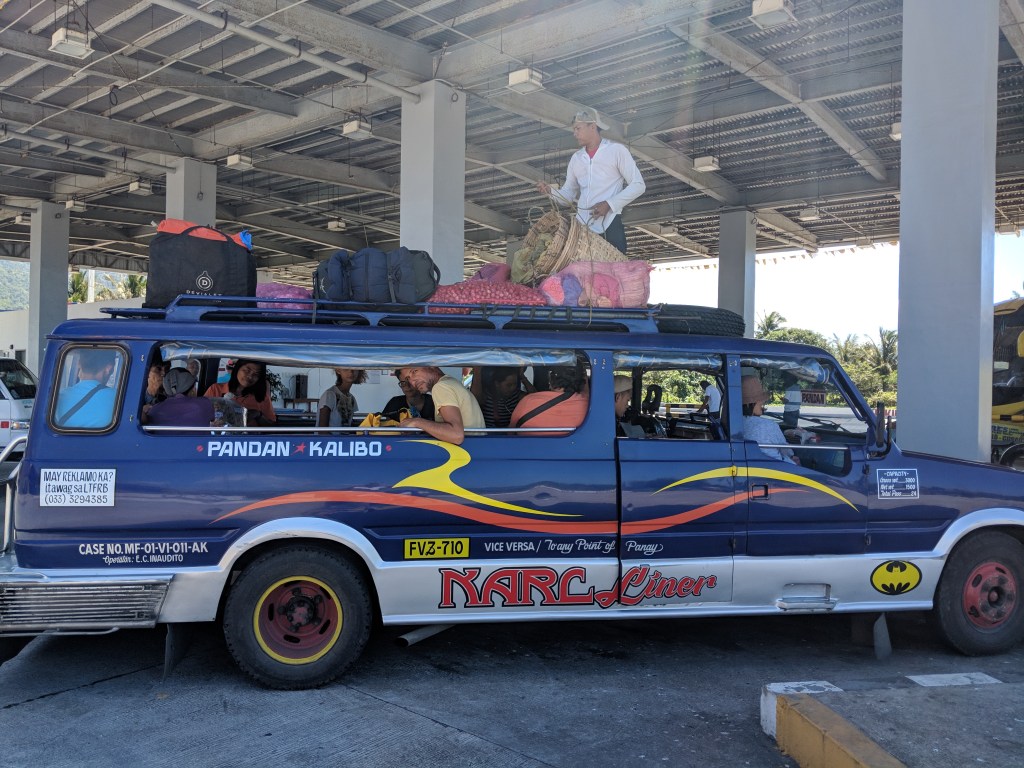
Have you ever ridden in a jeepney? Chances are that you haven’t, for even if you have visited the Philippines, unless you are a backpacker, you would have stuck to taxis. In our travels, we met expats who had lived there for years but had never been in a jeepney.

Well, you are missing on a practical lesson how decentralized trust works.

The jeepney is actually the most popular public means of transportation in the Philippines. It was originally made from the American jeeps left over from WWII. It is also the cheapest way to travel because of its open rear door design, the jeepney can pick up and drop off passengers anywhere. Having said that, it is not the safest way of transport, either mechanically (too old), or because of its seating configuration (a long bench with no seat belts, very low ceiling, combined with constant and sudden stopping).

What was fascinating for me was actually how its payment system works: it is all based on trust. Decentralized trust in fact. As it is not optimal to have a ticket collector, the jeepney driver is also tasked with collecting the money for the trip. The problem is that the entrance is all the way in the back. Not only the driver cannot collect the fare in advance, but he has to rely on other passengers to pass on the money to him. Many times he has to pass back change. The fare also depends on the destination which is shouted as the money changes hands, which adds an additional variable to keep track of. All this while driving, so obviously the driver cannot possibly follow up on all this!

But the system works. Passengers can see who has paid and who has not and they have an interest to keep its integrity in check not because of a fear of a fine (light regulation with minimal monitoring) but the realization that if it breaks, it means everyone has to take the more expensive and less convenient bus. Of course the system can also be ‘gamed’: if ‘majority’ of the passengers agree to cheat but the level/cost of cooperation is too high.

As societies become more complex it is basically suboptimal to rely on a centralized authority. An additional complication is if those societies do not have a strong institutional infrastructure, like in most of EM, or the traditional sources of authority start to be mistrusted, like in a lot of the developed world.  Decentralized trust then becomes a necessity and a prerequisite for maintaining the proper functioning of society. It seems to me that EM has the first mover advantage here and is likely to leapfrog the developed world.

Fiscal policy is next but it’s also unlikely to work

Simon Wren-Lewis wrote an interesting article yesterday The Interest Rate Lower Bound Trap and the ideas that keep us there

Unfortunately, the ideas that keep us plugging pointlessly at monetary policy are not that dissimilar to the ideas which will push us into trying fiscal policy: both of them are based on using the old industrial model of labor and capital income distribution which is much less suitable in the digital age where technology takes center stage.

What particularly caught my attention was the 3rd paragraph and this very relevant question: “If these countries really did have a zero output gap, then why is inflation below target?” Which gets to the core of the issue about how technology has possibly substantially increased potential output.

Yet, our models do not fully capture that. Perhaps that is because we continue to put too much weight on capital and labor in the production function when clearly technology has marginalized them both, the evidence being in zero rates and flat wages.

Let’s take capital.

1) there is a large corporate capital surplus;

2) digital technology does not require so much capital;

3) consumer debt is maxed out.

All three of the above lead to low demand for credit meaning low interest rates regardless/independent of monetary policy.

So, after years of zero/negative/low rates (decades in Japan) it is finally obvious that the monetary transmission mechanism is now clogged (see above). Naturally, despite all the opposition, we are probably just a recession away to switching to fiscal policy.

But as labor’s turn comes, there is no guarantee and zero evidence (see, again, Japan) that fiscal policy would work as its transmission mechanism is probably also clogged. And the reason can be found in the fact that it is easier for corporates to switch from labor to technology in automating production.

A diversion.

That’s where the debate about technological unemployment comes in. And here I am in the camp believing that this time things are different because technology is more advanced and is taking away ‘IQ’ jobs in addition to just ‘brawn’. ‘EQ” jobs are humans’ last call of resistance but maybe not for too long.

Sure, no evidence of this for now but that’s because in the initial stages, with aggregate demand low, companies will choose to focus on cost reduction by using cheaper labor (taking advantage of the threat of automation keeping a lid on wages), than higher output/higher productivity using technology.

We’ve had jobless recoveries before but post GFC’08, we’ve had a ‘wageless’ recovery – plenty of jobs but anaemic wages. Neither is particularly good for aggregate demand as individual purchasing power barely increases.

The situation is even worse now as consumer debt to disposable income keeps rising (people now need two jobs to survive).

In the short run, we could potentially see a rise in wages as the labor pool gets gradually depleted, but the switch to automation would also be faster which would push unemployment up/wages back down. In the long run, technology substitution becomes inevitable as both its cost continues to decline and its capabilities to rise.

And, by the way, we are not helping, as apparently we are also getting dumber (see “Were the Victorians cleverer than us?” by M. Woodley et all).

Diversion ends.

So, the most obvious fiscal policy stimulus is infrastructure spending. That’s much easier to get voted in given the state of our roads and bridges, etc., and the fact that there are probably already too many people shuffling papers on desk jobs working for the government.

Infrastructure spending could be the most economically beneficial option but could also contribute the least to aggregate demand if it bypasses labor due to automation: awarding a billion $ contract to a company to renovate a bridge using mostly automated machinery is hardly going to increase labor’s purchasing power.

My feeling is fiscal policy will indeed soon become the default option. Sadly, not necessarily because it would work better overall for increasing aggregate demand but simply because it has become plain obvious that monetary policy is powerless.

Instead, we need to think ‘beyond the Overton Window’. The income transmission mechanism which we have adopted since the first industrial revolution, Work->Job->Income is broken. Monetary and fiscal policy thus become redundant. We need a new model more suitable for the digital age.

Silk Road Footnote

Travelling across countries, where everything you know is different, from the language to the food, WC habits, social customs, etc., while knowing it is going to be never-ending, is overwhelming. Being always transient in each place is disorienting. Having to figure out every new encounter in terms of friends or foe, exhausting.

This trip proves to be very tiring on our emotional intelligence. I realized that in most of our daily life before, we rarely used emotional intelligence because everything is more or less a routine. Now, we have to constantly assess the situation: are people genuine, do they mean good, are we doing something inappropriate?

Saying that, I am not yet regretting our choice. Each day feels remarkable in a way that our previous daily routine, which was far from being stress-free anyhow, never was. We are also learning to adjust our expectations quicker, which, I think is improving our capacity to just relax and be… we have had especially a lot of waiting to do at borders, which was a full on training!

Most of my vivid impressions, in fact, on this trip are from crossing land (and now sea) borders because 1) they take a really long time; 2) they set your expectations for the rest of the country; 3) they are at the intersection of sometimes vastly different cultures, religions, customs; 4) they could open up new opportunities; 5) waiting at the borders gives me the time to reflect.

For me, this trip is massively going out of my comfort zone and facing my fears on all possible levels with an ultimate goal. To quote Walter Mitty: “To see the world, things dangerous to come to, to see behind walls, draw closer, to find each other, and to feel. That is the purpose of life.”

China’s credit expansion in perspective

Tags

There seem to be three aspects of the recent debate about China’s private credit build-up:

1) Is it excessive? Yes, but it is not extreme.

2) Has it been misallocated? Probably yes, but not necessarily more than in other countries now or in earlier stages of development.

3) How will the authorities handle the inevitable credit burst? That remains to be seen, but due to its unique political system, China seems to be more in control than other countries which have undergone a similar fate Question is whether this control will result in a positive outcome.

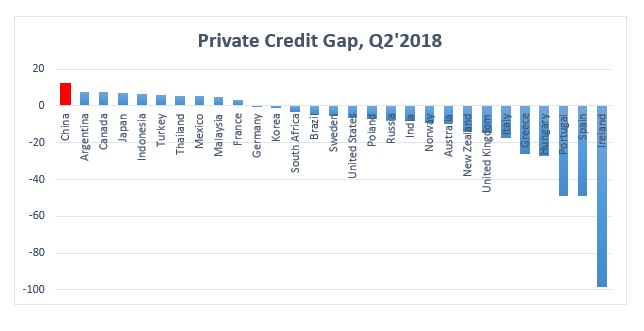
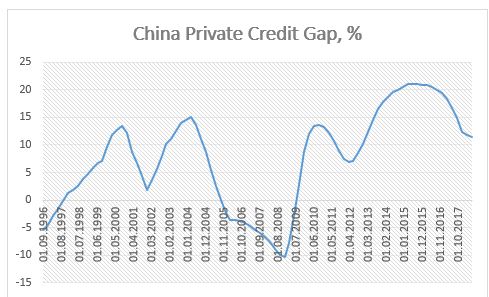
China’s recent credit build-up is indeed big: its recent private credit-to-GDP gap (a BIS indicator measuring the speed of credit creation now relative to its long-term trend) is currently the largest in the world. 

China’s credit build-up seems to have accelerated especially so after the great financial crisis in 2008. 

However, private credit creation growth in China reached a top (using four quarters MA of the credit gap as an indicator) sometimes in 2015 and has been decreasing since then. 


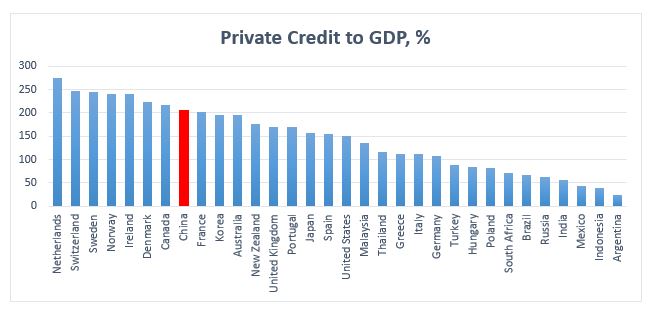
Indeed, China’s absolute private credit to GDP ratio is nowhere near some other countries’ extremes. 

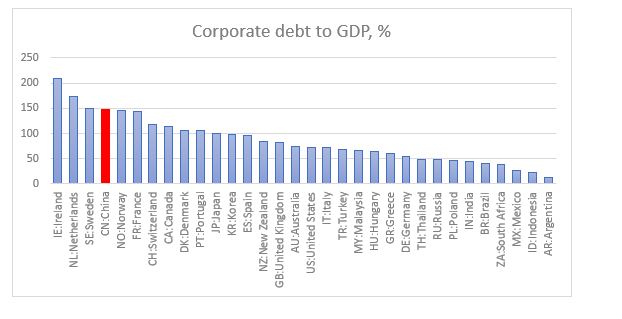
It is the corporate sector which has levered… 

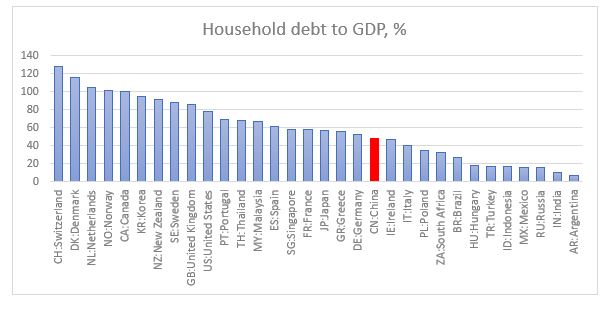
…with households still relatively unlevered. 

And of the corporate sector, most of the debt is concentrated in the SOEs. Finally, its government sector is unlevered,  leaving the total (private + public) credit to GDP even lower relative to majority of other countries. 


Bottom line is, China seems to have a lot of credit space left, giving it some room for “a beautiful deleveraging”.

The fact that most of the credit is in CNY gives a lot of flexibility of how that deleveraging is done – on China’s own terms (there is some foreign currency debt but a lot of it is either matched by corporate foreign currency assets or covered by the country’s own FX reserves).

Having travelled extensively throughout the whole country, I can confirm that there are ghost cities but the state of the overall infrastructure, pretty much everywhere, is first class, probably on par, or even better than most of continental Europe while putting US/UK infrastructure to shame. Having travelled also through all of Central Asia and after spending a month in the Philippines and now in Malaysia, I can also attest that the alternative, not spending so much on infrastructure, is infinitely worse.

So, by investing in real estate and infrastructure projects, and given its large population which is emerging from decades of under-development, is China misallocating more capital relative to:

  • the developed world, particularly, UK and US, where since the 1980s majority of credit created was against existing (unproductive) assets like residential real estate and financial assets for speculative purposes, leaving current infrastructure in a crumbling state? That’s in sharp contrast to the period between WW2 and the 1980s when credit was allocated to the production of goods and services and infrastructure projects like the interstate highway system in the US (a period more comparative to China’s developments now, and one largely heralded as the golden stage of economic growth).
  •  the developing world, which similar to China now is also in need of massive infrastructure development but instead national capital has been syphoned off to offshore wealth centres? Yes, there has been private capital outflow from China as well but it would have been much bigger had the capital account not remained closed.

It would take time before we know for sure whether the decisions Chinese leaders are making are beneficial for the country or not. It is fairly likely, though, that this credit expansion is not sustainable. Should this boom be followed by a bust, we could be fairly certain that the situation would be carefully managed by the authorities, unhindered by either hostile domestic political opposition, like in the majority of the democratic Western world or by foreign creditors, like in the majority of the developing world.

How would they handle it? If history is any guide, they did a pretty good job both during the Asian crisis in 1997/98 and the great financial crisis of 2008. Third time lucky?

I expect the authorities to continue building up the social safety net – pension and health care system – alongside expanding and improving the financial assets universe. They could simultaneously deflate the real estate bubble, by starving it of additional capital and inflate financial assets by encouraging diversification into them. Unlike, developed world countries where household wealth generally collapses during crises, Chinese households could come out unscathed from this as they are unlevered. In addition, any losses on their real estate portfolio could be offset by gains in their financial assets portfolio. Finally, with the right social safety net in place, they would also feel more secure for their future than before and therefore welcome such an outcome.


Note: All data used above is from BIS

Silk Road (8): China West to East

Tags

I speak and speak, … but the listener retains only the words he is expecting. … It is not the voice that commands the story: it is the ear.

~ Marco Polo to Kublai Khan


Xinjiang

We had to stand in a single line even before entering the China border control building, with the border patrol officers strictly making sure the line is not broken. Everyone, except us, on that bus from Kazakhstan was either Kazakh or Chinese but we were not asked any questions by the
authorities – almost as if they were expecting us. However, after passing
through passport control I was pulled on the side and an officer went through my mobile phone pictures.

We did not know it then, but we ended up getting used to officials in Xinjiang province asking to check our identities and taking photos of us holding the passports open on the picture page. At the border crossing
they did that three times: first, on entering the building, second, during
‘official’ passport check, and the third time, at the exit of the building.

Once in China, we got picked up by one of Max’s friends and driven to the nearest town of Khorgos. The first thing that struck me there was how modern the town looked (given that it is a relatively small border town in
a undeveloped part of China). The second thing that surprised me was how high the level of security was. Even though we were aware of the Uighur ‘situation’ there, I had never seen anything like this on any of my previous travels (including the Bekaa Valley on the border of Lebanon and Syria when I visited it in 2000).

There were metal detectors and heavily armed police on the entrance of any public building. In fact, there were security on any building entrance. There were also military checks pretty much everywhere on the streets. Despite this we never felt unsafe or worried. The people did not speak
any foreign language but were extremely polite and accommodative.

We stayed in Khorgos for about a couple of hours, literally: just enough to get something to eat and get on the overnight train to Urumqi, the capital of Xinjiang. Incidentally, in Khorgos we discovered one thing that made our travel in the rest of China much less stressful: one can buy train tickets in the local post offices which are all over town!

Anyone who has traveled in a self-organized way in China would know that securing train tickets could generally be a hassle: foreigners cannot book online (easily and instantly – there are agencies which could do this, but it takes a few days and still need delivery of physical tickets), cannot use the ticket machines (need passport details which machines are not
designed to handle yet) and therefore, the only way to do it (until we discovered the post offices) is at the train stations.

In our experience most train stations, especially the ones for the super fast trains as they were recently built, are far out of the cities. Buying train tickets in advance, which was for us a necessity in the case of some of the most popular destinations, would have been we a waste of time and money if we had to go to the train station and back.

Moreover, the problem with train station ticket offices is that they are crowded and the officials do not speak much English (and find it very complicated to enter non-Chinese identify details). While one has those
same issues at the post office, there, at least they do not have the pressure of hundreds of Chinese travellers getting impatient and hustling because it takes longer than usual.

The other thing we realized immediately is that the only way we could participate in the local economy was through cash. For example, we
attempted to buy train tickets for our next destination once we arrived at
Urumqi train station from Khorgos, but couldn’t, as our credit cards were not accepted, we did not have enough cash and the only ATM machine there was out of order.

Away from top hotels and restaurants, non-Chinese credit cards, indeed, are not really welcome and everyone uses WeChat/Alipay otherwise. At least ATM machines would generally accept non-Chinese debit cards which meant that, as usual on this journey, we ended up travelling with a
decent amount of cash (we are four people after all).

China is not cheap. Part of it was due to our unwillingness to put up with the risks associated with real cheap lodging and food in a country where, we had heard, hygienic and safety standards might not be as
strict as ours. Part of it was due, though, to the demands of an intense local tourism business which must be pushing the prices of train, restaurant and hotel, more or less, on level with those in Europe. How is this possible, I thought at first? How can the average Chinese afford a $60 train ticket and a $100 hotel room? Well, because, the actual Chinese tourist is not of average income but their sheer size allows for that economy to flourish. When one considers that the Chinese middle class is
equal to the size of EU’s total population, then suddenly buying that $60 train ticket does not sound that crazy (and also explains that all the trains we took, without exception, were full).

We arrived in Urumqi in the very early morning with the ground covered in freshly fallen snow. We could not immediately check in our hotel but we left our luggage there and went around looking for something to eat. That’s when we discovered another peculiarity of China. Away from the really big cities, like Shanghai and Beijing or tourist centers like Hangzhou, generally speaking, there are no Western-style cafes. There are, of course, Chinese pastry shops, but they do not seem to start baking anytime before they open (around 9am or later) which means no pastry or bread before lunch time.

Coffee is not really a Chinese thing (the default is instant coffee), but the really big surprise, for us, was that restaurants in Western and North China do not serve tea. What is customary, though, is to be served plain hot water. In fact, there are hot water facilities everywhere but especially so in the trains and at train stations. It is very common to see people in that part of China carrying their special hot water bottles around with them everywhere. Georgia loves her tea and eventually she also bought a hot water bottle to enjoy everywhere we went.

We continued to notice heavy military presence everywhere in Urumqi as well. I don’t know whether it was related to the recent events, but all public parks were closed. There were military drills in the streets as well. In another flashback from my life behind the Iron Curtain, we witnessed
early morning police exercises including stretching and running in a circle in the public squares.

As we walked around the city (and we walked everywhere), we saw the police/military teaching common shop owners how to defend themselves
and what to do in case of riots. But, just like in Khorgos, we did not feel
unsafe at all. We stopped to observe these drills and the police did not seem to mind, apart from scolding the people they were teaching every single time they got distracted looking at us and not following their commands.

Despite its natural beauty and because of its remoteness, and especially because the government discourages travelling there, Xinjiang region is not popular with foreign tourists. In fact, I don’t think we saw any Western-looking foreigners in Urumqi. So, everywhere we went we were greeted
both with curiosity by the locals and with special attention by the authorities: double checking passports and taking more photos. In each case, though, done in a very friendly manner. If at first we found this special security attention amusing, after only three days there though, we had a bit too much of it. I was both happy to get on the fast train to Dunhuang and somewhat disappointed that we did not have a chance to venture out of the city to explore more of the natural beauty this part of China has on offer.

Gansu

The Gobi desert rises just outside of the city. I use ‘rise’ here intentionally as the Gobi is unlike any other desert I had ever seen and resembles more a small mountain: the sand dunes are massive.

Dunhuang used to be an important stop on the Silk Road, but was pretty much abandoned in the middle ages. It is not a big city by Chinese standards at all and nowadays is famous for the Mogao Caves, the first of which was built (yes, they are artificial) more than 1,000 years ago. The legend has it that an Indian monk, after wandering in the Gobi desert for days, had a vision of a thousand Buddhas (surprise, surprise!) and decided to stop and dig a cave there in dedication. Eventually, more and more caves were built at the site.

The caves are dug out in the rocks in the desert. There are hundreds of them but not all of them are open for visitors: we managed to see only 8. The caves obviously have a lot of archaeological significance (the largest collection of Buddhist art in the world on their walls) and carry a lot of history (the Library Cave, walled off until recently, contained thousand of
documents, among which, the oldest printed book, in more than a dozen different languages – most of these documents are now in museums in India and Britain, by the way).

The Mogao Caves complex is very well organized. On arrival, visitors are ushered in a very modern building and shown a 3D video of the history of the caves. Then they get on special buses which take them deep in the desert where the actual caves are. There, they cannot just wander off
unaccompanied by a guide. Finally, special high tech makes sure the air
pressure and consistency in the caves stay constant to ensure the longevity of the art there. Visitors cannot take any pictures inside.

There is some irony in all this. The archeological significance of the caves was only recognized fairly recently. For example, even in the early 20th century they were unguarded and anyone could go in unhindered. During the war, the government decided to use the caves as a prison for captured Russian soldiers, who vandalized a lot of the art in the caves. And even a couple of decades ago, the public could visit the caves without a guide. Definitely worth visiting if you are in the area, yet somehow, I think the Necropolis in Shiraz is more impressive.

Yet, it was the Gobi desert that I was really looking forward to visiting. On our way back into town for some street food for lunch, we struck a conversation with a young family, a rare occurrence as people generally do not speak English (or any other foreign language in that part of China).
They were so nice that they went out of their way to pick up their car and give us a lift to the desert on the outskirts of the city.

I have to say, nothing prepared me for the majestic sight of the Gobi desert. When I think of desert I imagine flat land but the sand dunes in Dunhuang suddenly rise out of nowhere as the city end approaches. It looks almost surreal. To top it off, among the sand dunes there is the so
called Crescent Lake: a real oasis in the desert, shaped like a crescent, thus the name. We took the whole afternoon and well into sunset to climb up and down the sand dunes. The kids had an awesome time sliding down, pretending they are on a ski slope.

The Chinese clearly enjoy spending time in the outdoors but, at the same time, they somehow seem to prefer to have as little contact with nature as possible. Not sure whether it has to do with a (convoluted) idea of
modernization and urbanization whereby the average Chinese thinks he has ‘made it’ coming out of the village with its agrarian lifestyle, but we saw it on numerous occasions visiting Chinese natural landmarks. For example, on the foot of the dunes here in the Gobi desert, you can rent special boots which protect your own shoes and socks from the sand. We, on the other hand, went the opposite way: even though, it was rather chilly, we took off our shoes and socks and went barefoot!

That evening, as we were wandering the streets of Dunhuang in search of an ATM we stumbled across a tiny family restaurant. It literally felt it was their living room as there were no other customers and the family’s two kids were doing homework on the table. The mother was helping the younger son while the father was in the kitchen. The kids were very curious to start a conversation as, it turned out, the older one was actually studying English. Still, their English was not on the level to allow us to order food (no menu and no pictures), yet we had already been well prepared for this language barrier. We had brought along a “Point It” book which had hundreds of photos separated by category: one could simply point to in order to have a basic communication.

It was a lovely evening during which there was a genuine connection between us despite the language barrier. Our kids read their English
books, while the Chinese kids, on the other hand, helped with Chinese
pronunciation.

Dunhuang is, unfortunately, not on the fast train line, and one has to take a 2h drive to the nearest “connection” – a strange choice by the Chinese as that fast train station is literally in the middle of nowhere. Anyway, from there we headed to our next destination of Zhangye.

This city is is much bigger than Dunhuang, and just like it, was
an important outpost along the Silk Road. So much, that Marco Polo decided to spend one year there – for which they erected a statue of him in one of the city’s squares. Apparently, the Mongol emperor Kublai Khan was born in the Dafu Temple in the city. What the latter is actually famous for is the longest wooden reclining Buddha in China.

We arrived in Zhangye in the evening, quite exhausted and hungry. We could not find proper transportation from the train station into the city and had no choice but to take one of the touts. Throughout Central Asia, that had never been a problem and we had taken many of them, but in China, we had heard many unpleasant stories. Anyway, we managed to negotiate a reasonable fare and we set on. As usual, I would follow the navigation on my phone, more out of curiosity than anything else, but this man would have none of it and was obviously irritated that I was doing it. We were communicating through the translation apps on our phones, which are not always right, but his comment was something like this, “I am a former China special forces, you should trust me!”.

Throughout our trip into town he was trying to convince us to take us to the Rainbow Mountains, another must see sight in the region, the following day. I had to politely explain that we would think about it and get back to him (I did take his number). When he dropped us off to the hotel he hanged around waiting for us to check in while discussing something with the receptionist. When he even requested to take a picture of our daughter, we did get a bit worried and we all grouped on it instead. We almost expected he might pop back at the hotel the next morning and were relieved that it wasn’t the case.

The hotel was in the town center, but the best way I can describe it is “dodgy”. There was this big neon sign in front of it which stated the room rates per night as well as per hour! The receptionist was smoking profusely all the time (disregarding the non-smoking sign) while checking us in. On the upside, however, he spoke decent English and was rather
polite.

We left our luggage and, despite the late hour, we hurried out to find something to eat. Normally, there would be lots of choices of
street food but in this case we could not find any. There were the usual
Western fast food places (KFC, McDonald’s, etc.) and the Chinese fast food ones (local joints which normally are better than the Western, but in this case they were infinitely worse as people were smoking inside). Eventually, we came across a second floor, decent looking, non-smoking, and rather inexpensive restaurant.

We sat down at a table and a couple of people came over to take our order (because of the late hour, the restaurant was rather empty). Of course, none of them spoke English and there was no menu with pictures. The “Point It” book turned out to be of no much help either. We slowly realized, that this was a ‘hot pot’, a typical restaurant for this part of China. The way it works is they put a pot with a specific sauce on a “fire” in the middle of the table and then customers choose vegetables and meat to go along. Sometimes, in the West, this is called “Chinese fondue”. They were very nice in that restaurant. To explain all this, they took Georgia to the kitchen and throughout our meal they were super helpful: it felt that we had a private dinner!

The following morning, we took off to see the natural beauty of the Rainbow Mountains but not before we stopped by the post office to buy the tickets to our next destination, Xi’an. In the bus to the mountains we struck a conversation with a Filipino who had a business in China and who
suggested that we should also visit Binggou Danxia, a rock formation, on the way to Zhangye Danxia (which is the Rainbow Mountains). It was a great choice! The place is amazing – in 2000, Binggou Danxia Landform was nominated by National Geographical Magazine as the world’s top ten magical geographical wonders. What was surprising, as we would soon discover on our subsequent tourist stops, was that it was deserted. We did, however, catch a sense of the Chinese “Disneyland-fixation” as they play loud music, the walking paths are well designated and everything is groomed.

We were so glad we had literally stumbled upon this natural wonder, that we stayed as long as we could before rushing to pick up the alleged bus to the Rainbow Mountains. The problem was that that bus never materialized. Not knowing when the next one would arrive we tried to hitch hike. After a few cars passed by with only a look of utter surprise on the face of the driver (and/or passengers), eventually one stopped a few meters afterpassing us, turned around and came to us. The driver was really nice and, I believe, genuinely wanted to help us but the problem was that we did not understand each other. We thanked him anyway but were getting worried a bit as it was getting late as well.

Luckily, just when we started to despair, a bus arrived, strangely going in the opposite direction, or so we thought. A couple of college kids inside spoke broken English and reassured us it would take us to our destination, so we boarded and after half an hour we were at Zhangye Danxia. This is the more popular tourist site in the region and it showed: hordes of Chinese tourists organized in buses to take them to see the colorful mountains. The scenery is spectacular, true, but somehow the way the trip was organized took a bit off the excitement being there: you get on a bus that takes you onto the first sightseeing spot, you get off, follow a well trodden path, take some pictures and get on a bus to go to the next spot. Can’t wander off, can’t go off the path as you are under the watchful eye of many officials always nearby.

The whole experience was more like going to the movies: if anything, everything was so efficiently done to limit any interaction with nature. Which makes me think that the Chinese would be perfectly happy and very open to the arrival of VR. It seems to fit nicely their culture and society. It was partially this, partially the fact that the evening was fast approaching and we needed to take a bus back into town, that we spent a rather short time there.

Back in Zhangye, we finally repaired my son’s phone, the one he broke in Yerevan which made him very happy! We were off to Xi’an the next day – to an extent this was kind of the end of the really exciting part of the Silk Road journey for me, as I and Georgia had already in the past visited all the cities, until Huangzhou, which we were about to visit again.

Shaanxi

As we had travelled from West to East along the Silk Road, a thought was reemerging. This is how, in general, ‘information’ flowed in
antiquity: the monks who travelled from India to China to spread Buddhism, for example. And then beyond China: we found out, actually, that the city of Kyoto in Japan was modelled after Xi’an.

I realized that there was very little I remembered from the last time I was in Xi’an in 2007: this was how much the city had changed. Our hotel was very close to the Bell and Drum Towers (after the experience in Zhangye, we decided to treat ourselves and stayed in a really fancy Art Hotel).
I did remember those but everything was different around them: two massive Starbucks, a KFC etc. and an array of high-end Western shops along the avenues leading to the Bell Tower.

Our ‘goal’ in Xi’an was to show the kids the Terracotta Warriors site. No doubt the extreme commercialization which we had started witnessing in all Chinese tourist attractions was in full swing there s well! Ok, the actual
site is still impressive, but everything around it was too much for me: the
buses, the stands selling everything, the overpriced restaurants. I would say, if you have never been there, it is worth going but some of the charm is definitely gone.

Yet, one can still learn something new and interesting in Xi’an. This city is old, one of the few cities, still standing, around the world to have a history spanning three millennia. For example, we spent almost a full day just walking along its city wall. The city is also the site of the tomb of the only female emperor in Chinese history, Wu Zetian. A former concubine, she was ruthless – actually deposing her sons from the throne to become Empress. Bu she was also efficient – allowing for advances in education,
improving taxation, and encouraging trade by reopening of the Silk Road.

Xi’an is also considered the ‘buckle’ that ties the belt together in the One Belt One Road idea thanks to its extensive rail network (the dark side of this industrialization is that usage of coal is still predominant which makes the city one of the worst polluted in China). But the Xi’an is also a pioneer in the digital sphere by becoming the first one in China to have its metro accept cashless QR code tickets linked with Alipay mobile payments. In fact, Xi’an has a New Software Park where Alibaba is planning to build its ‘Silk Road Headquarters’ to cover all of Western China (the name Xi’an, actually means “peace in the West”). Finally, Xi’an is also the home of
China’s space exploration program: it is planning to be the first nation to
reach the dark side of the moon!

 Beijing

The kids were actually really excited to visit the capitol. They had studied about China but the fact that China, aka ‘Beijing’, has been constantly in the news this year on account of the trade frictions, was a factor.

Beijing would turn out to be the most expensive city on our Silk Road Journey, so we had to resort to even more budgeting and planning carefully. For example, the hotel we booked was walking distance to the
Forbidden City and had amazingly considerate concierge (I am kidding, the hotel concierge did indeed help us order delivery for dinner and paid with their own personal Alipay account – we, of course, paid them back – but we did not plan this!).

Not that transportation is necessarily expensive in the city. The Metro is very affordable while DiDi, the taxi sharing company, supposedly the only large start-up in which all the three Chinese giants, Alibaba, Tencent and Baidu have stakes in, is infinitely cheaper than normal taxis. There are also the city bikes, which are the epitome of true sharing: they can be left anywhere in the streets as they can only be unlocked by QR codes on WeChat.

For all the talk in the media, Beijing, itself, is actually not really polluted if it was not for the industrial zones around it (for example, Shandong Province) and the proclivity for the wind to blow in its direction. Also, despite Shanghai considered the financial capital of China, there are more Fortune 500 companies headquartered there than anywhere else in
the world except Tokyo!

We spent a day enjoying the splendor of the Forbidden City, majestic as ever (and how I remember it – very big – as big as 28 football fields), lingering the streets in Hutong (massive change – I think it has shrunk by half from the last time we visited – and definitely lost its charm) and wandering the little shops (and antique tea houses) around Houhai lake. It
was in Beijing that we first saw such delicatessen as scorpions and snakes for sale in the street food markets.

The Great Wall of China was another day trip. Beijing is already very well strategically located, mountains on the north and west, with the Great Wall an added bonus for protection. We got unlucky a bit as the weather that day was bitterly windy but we toughened it up for the kids. Otherwise
nothing has changed much from before – only the hordes of Chinese tourists, and their inconsiderate behavior (littering, pushing, being loud, etc.), has increased.

On the way back into the city we stopped by the Beijing Olympics Stadium – our son really wanted to visit it. Unlike other former Olympics stadiums which may have been left derelict, the Bird’s Nest (as it is called) is as glorious as ever, especially at night with the lights on – it has a truly futuristic feeling. That Beijing will be the first city in the world to host both the summer and winter Olympics maybe has something to do
with the fact that the stadium and the Olympic village next to it have been kept in pristine condition.

The third day in Beijing was devoted to the Summer Palace, which is more like a massive garden and where the emperors spent their…summers. There, you would still see impressive buildings and pagodas but one should visit with the idea of immersing in their splendor and just relaxing and letting time pass by. In the evening, we visited Tiananmen Square and Mao’s mausoleum. While the latter was lit up, ceremoniously guarded and
full of couples taking selfies in front of it, the former was left dark and was
off limits for tourists. This prompted some questions from my son about
postmortem fairness in history.

The next morning, we got on the fastest train in the world and headed to Shanghai…

China Part One – Pandas Are Extinct

No panda crossed our road in China.

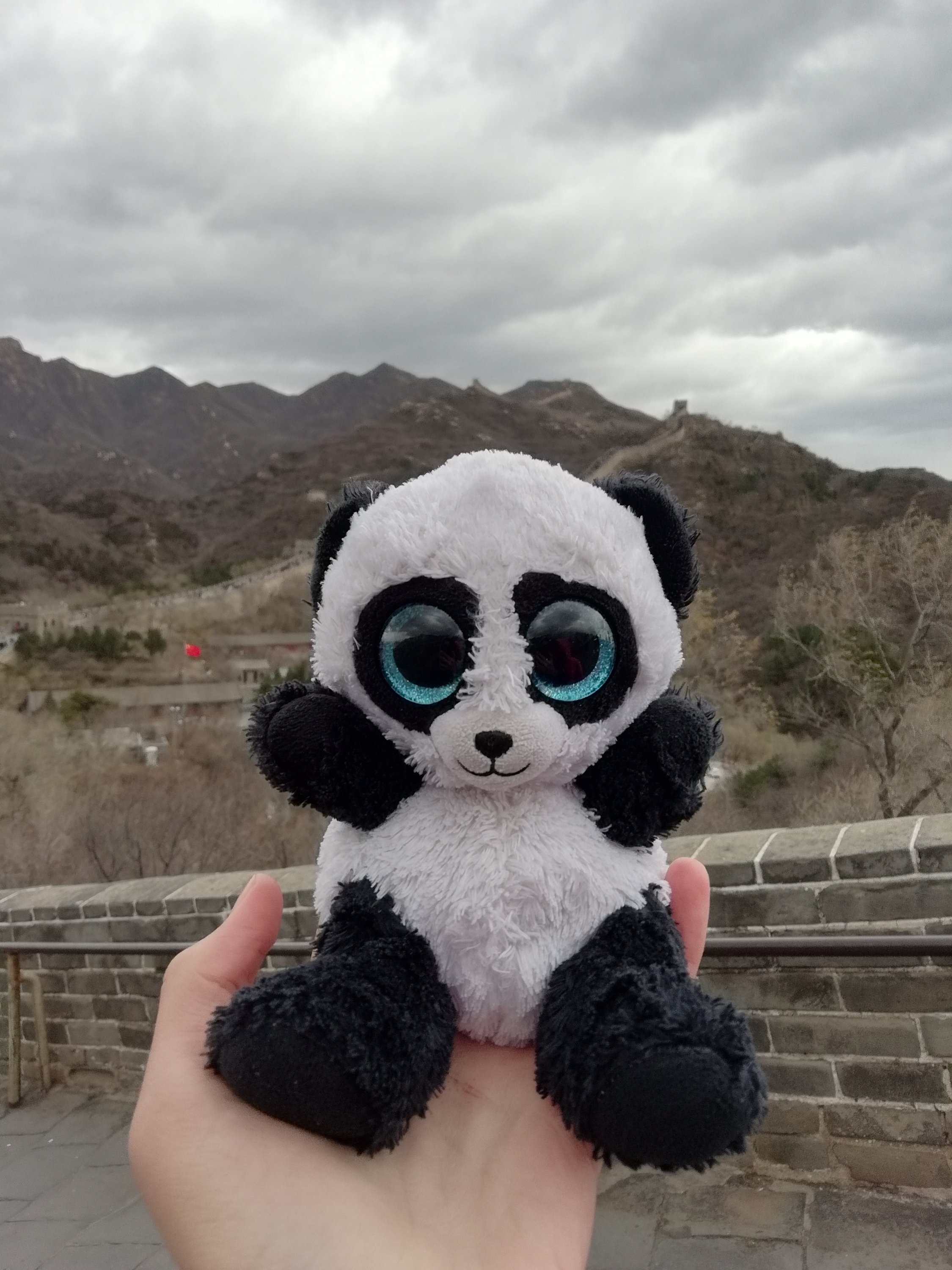
However we did see one – my sister’s pet panda was busting vibes at the Great Wall of China.

Say hello, Sydney.

S: 🐼👋

Our first stop in China was Urumqi (handy tip on how to pronounce it: “a room key”).

We had entered through the Kazakhstan-China border, and of course, we ran into a situation.

The ride to the border was actually pleasant – a Kazakh friend offered to drop us off by car. Once at the border, a man took us to passport control. We passed the check and therefore started walking to the Chinese border before a loud voice on a megaphone called us back. Confused, we returned to the news that we couldn’t walk to the border (note: it was a five minute stroll away) and the only way we could cross was to wait an undefined amount of time for a bus coming from a distant village, so we could hitchhike it, if it wasn’t full. Even more so, we would have to pay the driver for those 2 minutes’ drive.

But it doesn’t stop there. Once back in the waiting area, we were pestered by security guards asking us questions individually (to me – “What is your mum’s name?”, to my mum – “Can you confirm your husband is from Ukraine?”)
When the guards were satisfied with our answers, they finally left and we were on our own in the waiting area for the next three hours.

Major problem? They hadn’t bothered to put on the heating.

Mind you, this is still Kazakhstan we’re talking about. Where it was snowing!

So the extreme cold left me shivering for the whole wait – the freezing seats didn’t help.
On the other hand, I did get to read on my kindle, my trustworthy library of books. I knew it was a good idea to bring it on the trip.

From time to time, a few individuals would pass through the waiting area and eventually my dad striked up a conversation with one of them. They talked for a bit and the guy offered to negotiate a free ride for us. That was a relief for all of us, as now we didn’t need to worry about the bus being too full or not having enough money to pay for it.

Eventually the bus arrived, the passengers got off to pass through passport control, and, soon enough, the waiting area was filled up. Only then they switched the heater on, which, actually, didn’t matter, as, five minutes later, we all went outside to get on the bus to no man’s land.

Unfortunately, the Chinese border picked that exact time to close down for lunch break. Thus we ended up waiting on the bus for half an hour. Needless to say, I felt uncomfortable: we were clearly the odd ones out – among others we were hitchhiking a bus while other passengers actually had to pay.
Finally, the border opened and we set out to cross into China. At last.

Urumqi was interesting, the tension was thick – it was clear something was going on. This feeling was proven correct: police was stationed on almost every street and we witnessed constant drilling (of the police force and, even, of the shopkeepers). Not only police checks were clearly present in the streets, their red lights flashing 24/7, but also security guards and metal detectors were positioned at the entrance of most shops – even the budget hotel I stayed in! I later found out that the Xinjiang region is a predominantly Muslim area which is considered a troublemaker by the Chinese government.

Being so close to Almaty, Urumqi still had traces of snow in the streets, which quickly evaporated in a couple of days or so, which also meant no snow fight😔.

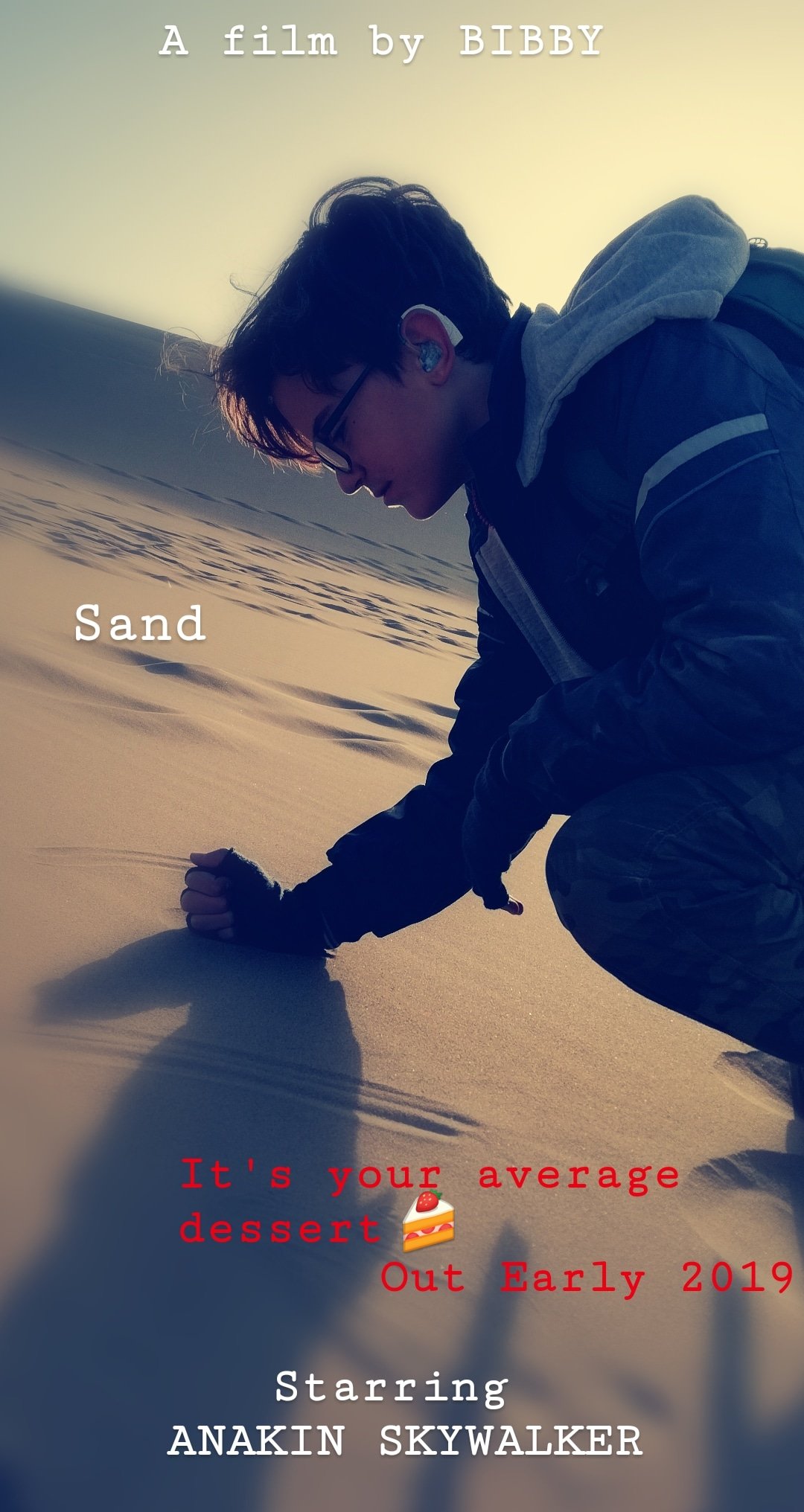
The next stop was Dunhuang, which I really really enjoyed. Mostly, it was because we spent half a day climbing the sand dunes in the Gobi Desert before rolling/running down.

(I created this poster out of it, because why not)

We also visited the Mogao Caves , where we were led on an English tour, accompanied by a German biker and two Swiss. The main part of the tour was the cave of the large Buddha but I preferred the cave that talks of karma. In it a special deer saves a man from drowning and to return the favour, asks him not to reveal its location. However, when the king suddenly requests the capture of this special deer, the man helps to find and capture the deer for a reward. But after the animal tells the story to the king, it is let go and the traitor is punished. To my parents bewilderment, the story of a prince purposely jumping off a cliff to feed two tiger cubs starving to death, also really captured my imagination.

Talking of Buddha, Zhangye, the next city on our schedule, is home to the largest reclining Buddha in China, which we did, of course, visit. My impressions? It was, well, long! But that wasn’t all. Stunning beauty? Nature at its finest? That’s the Rainbow Mountains. Indeed we came to Zhangye mostly to see those colourful hills stretching across a distance of 322 square km. I was in awe of the mountains. On our way there though we first stumbled into the Binggou Mountains. The rock formations there were just incredible, varying from tall towers to rocks that resembled turtles, snakes and even a frog!

Xi’an was next. The hotel we stayed at was amazing. It was a contemporary art gallery/hotel, so of course it was heaven for my mum. I genuinely enjoyed the creative mood of the hotel and was sad to leave. It was one of the best I had been in.

The actual city itself was ok. The old city was surrounded by a wall where you could walk on. It was interesting, because it gave us a high view (*cough* high ground, Star Wars fans *cough*) over the city: we could see women playing poker on the streets, scooters zooming by and even a school playing at full blast Fhur Eliza on the speakers of its basketball court.

Of course, we also visited the Terracotta warriors, the legendary army of clay soldiers buried with the emperor to protect him on his way to the afterlife. I found amusing that it was all discovered by a bunch of farmers digging for a well. Who knew that would lead to a discovery of such importance?
Other interesting things: there wasn’t just soldiers, but also calvary, chariots, pottery, servants and entourage; each piece was individually created i.e. arm, leg, before they were assembled. Impressive, huh?

And now…Beijing!!!
The capitol!!! *cough* Hunger Games *cough*

We spent a day strolling through the Forbidden City, a city reserved only to the emperor, his family and his entourage. How ironic, since now it is open to everyone, bursting with tourists. No matter how grand and spacious it is, it mustn’t have been very exciting living in a whole city all alone, closed from the outside world. I find it astonishing that an emperor would spend his whole life doing that – when he is meant to rule China (which is one of the biggest countries in the world, in terms of population and land mass).

That night, we went to see the Olympic stadium lit up, white and blue colours illuminating the nightly air.

All the neon lights and loud music made the famous Olympic stadium even more stunning than I imagined.

Mostly though, I still can’t believe I’ve been to one of the greatest landmarks in the world – the Great Wall of China. Even more so, I get to brag that Sydney, the panda went there too. 🐼😎

The specific section we took was mostly uphill and it gave us an amazing view at the top. Being on the wall, overlooking miles and miles of landscape I could imagine what it would have been like to be a guard patrolling the wall – I could see through his eyes.

While in Beijing, we also indulged ourselves in eating a peking duck, a dish greatly appreciated by emperors and first introduced in Beijing during the North and South Dynasties. We ate it wrapped in a pancake, after dipping the fatty roasted skin in sugar and jam. It was absurdly delicious – I helped myself to a large portion of it. The name Peking was only introduced later on during the Ming Dynasty.

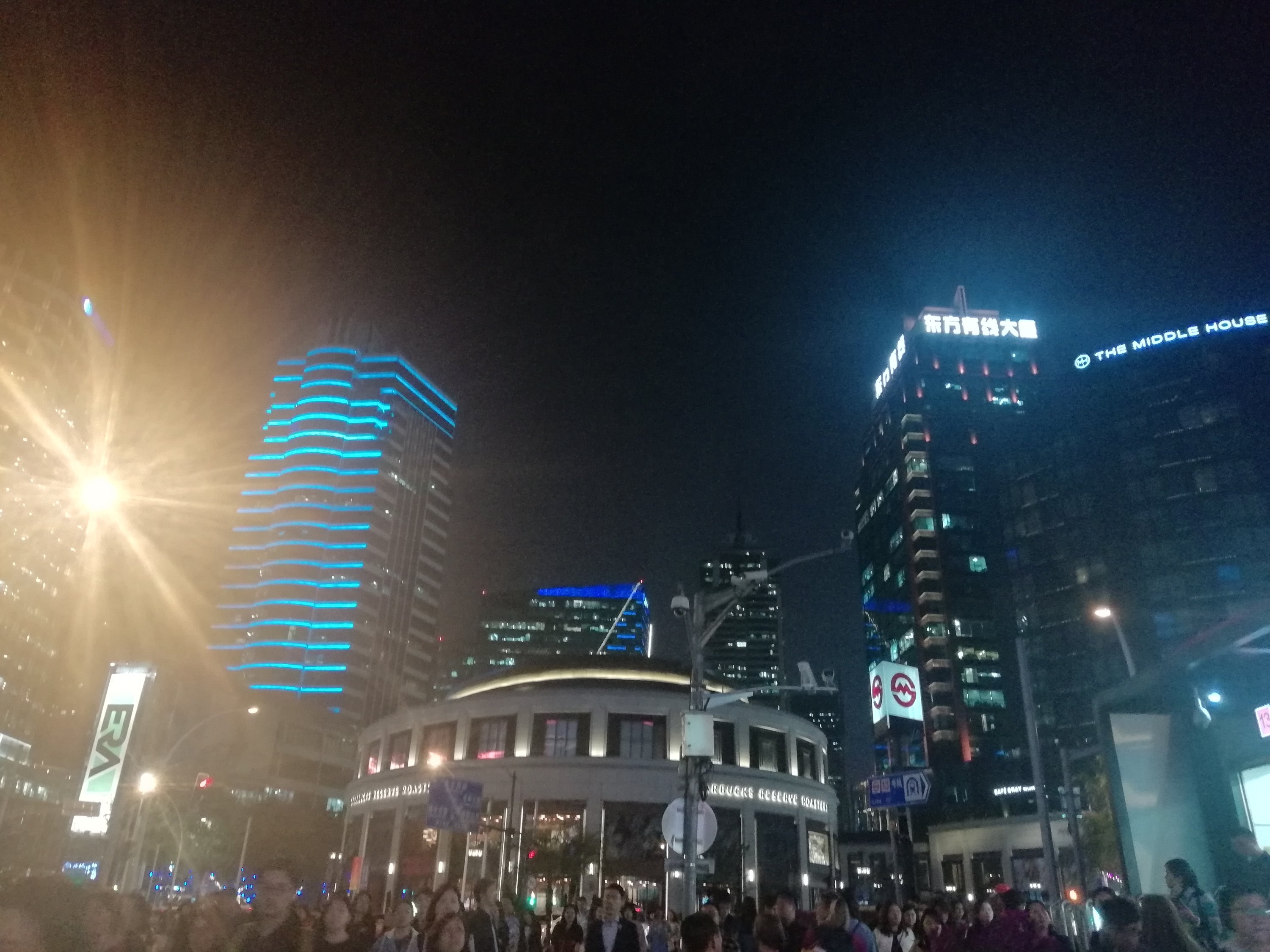
The next stop was Shanghai. We all enjoyed Shanghai, but I particularly did because of its futuristic atmosphere – all the tall skyscrapers looming throughout the day, and the city lit up with sound and colour at night.

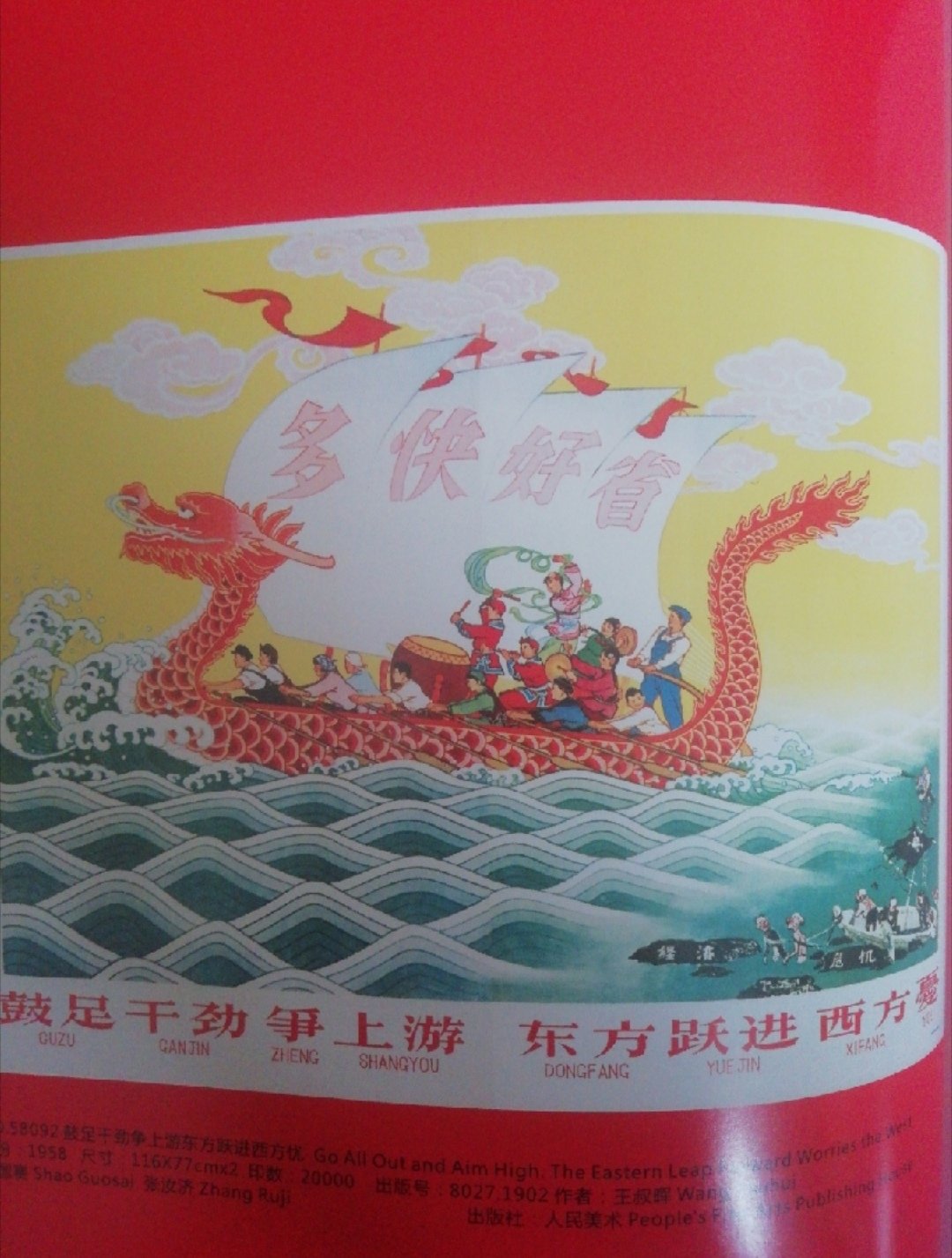
There, we walked along the Bund – where more looming buildings were built on the other side and we visited the Propaganda Art Museum – where most art depicted China as extremely successful and Europe and America falling behind. Below are a couple of my favourites posters.

As much as I loved Shanghai it was nice to take a break from the lively and busy city though, and, once in Hangzhou, we decided to lodge in the the nearby forest, rather than in the centre of the city.

We did go to the city though, but ended up having to walk since not a single taxi would take us. Why? To this date we still don’t know. We could only imagine that we were victims of discrimination… and, man, it was painful (literally, as we ended having to walk more than 8km).

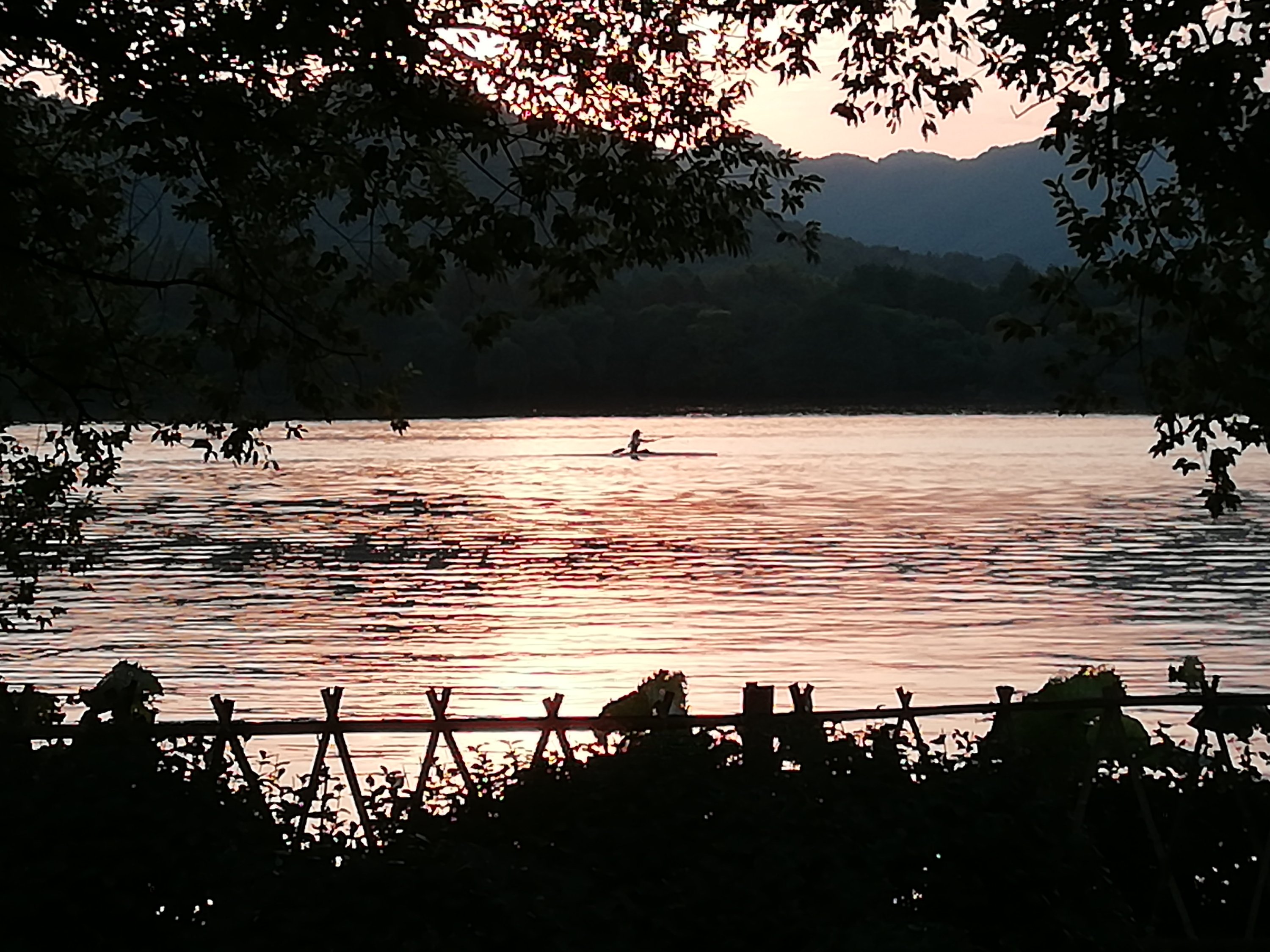
Beside this misfortune, we still managed to see the famously romantic West Lake, the calm water reflecting slivers of the setting sun.

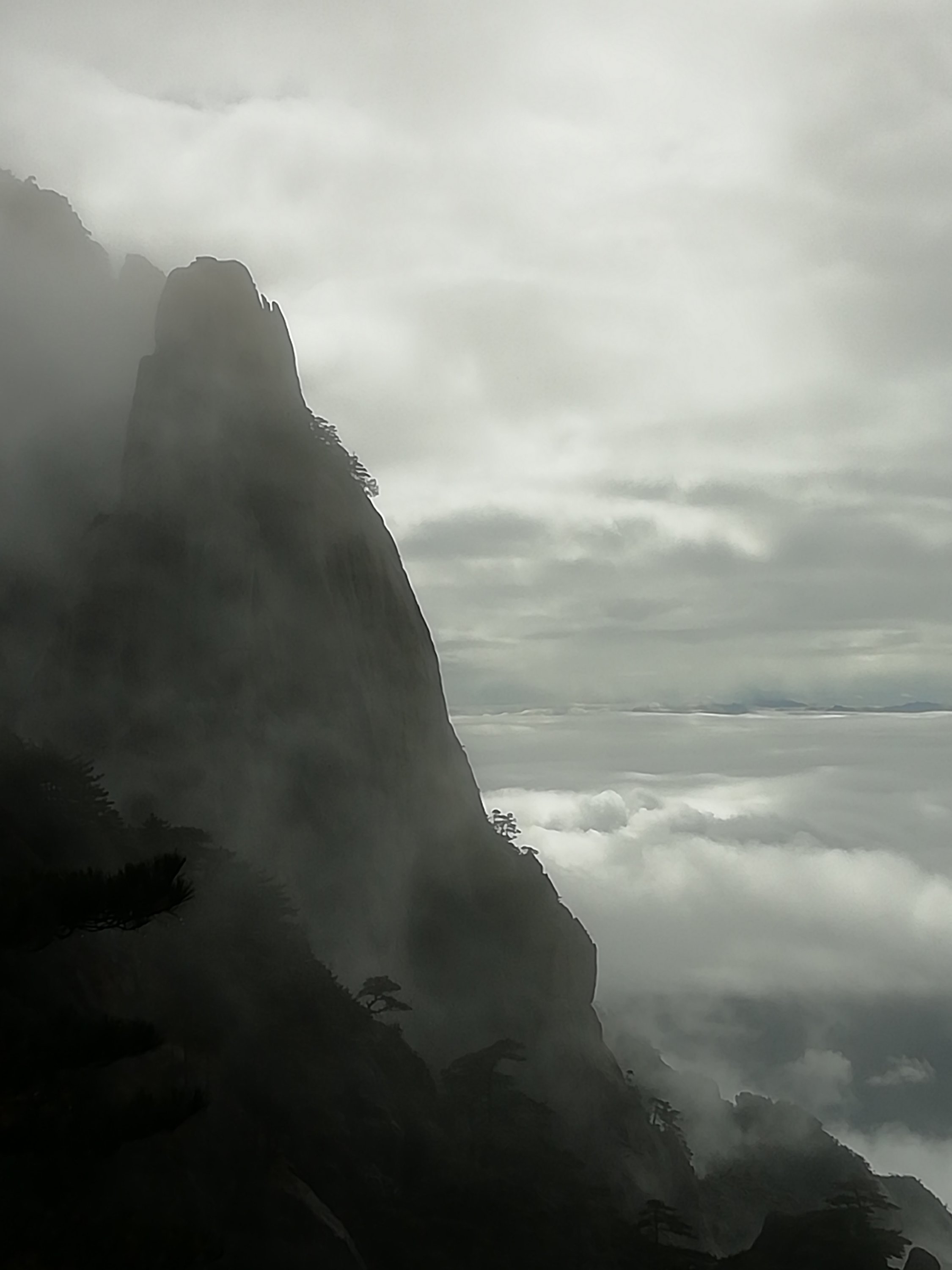
Home to the renowned Yellow Mountains, Huangshan was our next reside(Huangshan literally means Yellow Mountains, which left me wondering if they couldn’t be any more creative). It is so called because the Yellow Emperor, the mythical ancestor of the Chinese, lived there. Eventually, it became well known for the odd pine trees, hot springs, clouds and peaks. Here, it was the weather that didn’t assist us – the day we chose to visit the mountains, it was raining and quite foggy. On the other hand, it did add a majestic and mysterious feel to it.

On the way up, we took a cable car, but we decided to go by foot on our way down, we walked 7km. And man, that was long.

Next up was Yangshuo. We spent the majority of the first day sitting on a raft while a man paddled us across the Li river. It was a satisfying experience, including mini-waterfalls, where we would ride down, screaming all the way. At the end we rented bikes and rode through the countryside back to the city. The next day, we visited the Silver cave which, while it was impressive, felt artificial, because of manned colourful lighting everywhere (more on this in my next post).
The last day we rented scooters. Feeling the wind as we rode through stunning nature was a first for me and felt very pleasant. I chose not to wear a hat (helmets aren’t compulsory here) and life came back to bite me in the face by giving me a sore throat the following day. Eh, it was worth it.

Bear with me, folks. We’re almost done.

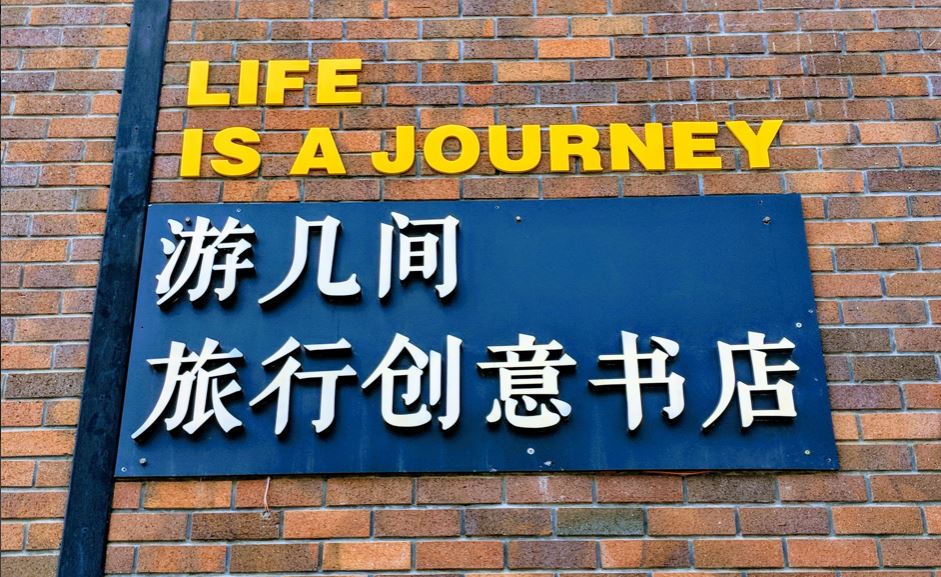
Before our last stop, (Hong Kong, which has a special status and not considered mainland China, but let’s not dwell on the technicalities), we stayed in Shenzhen – China’s Silicon Valley – for a couple of days. I was in awe of the products being sold. My parents marveled for long time in front of a 3D holographic fan. The city is also home to, apparently, the largest bookstore in the world, which I was happy we visited.

Finally we arrived to what I expected to be one of the most glamorous and busting cities of the world – Hong Kong. In the back of my mind, throughout the whole journey, I just couldn’t wait for Hong Kong, one of the only three cosmopolitan financial centers in the world. Already as a young kid, I was intrigued by what I imagined to be a city of exhilarating sights and complex culture. It came as a disappointment to realize how similar it was to London!
Just as in London, Hong Kong sported humongous looming buildings, double-decker buses driving along the road, and huge crowds of people pushing past each other on the pavements. It just didn’t feel as Asia anymore…
On the train to our hotel; a young girl leaning on the pole (must have been around 6 or 7) was reading a particularly popular English book; later on, a man accidentally bumped into me and instinctively said “Sorry” in English. Even more so, English signs were everywhere and shop assistants in English high street franchises (Mark and Spencer, Debenham etc…) were speaking in accurate British accents.

I do wonder, if we had just taken a plane from London to Hong Kong, instead of slowly coming to the city through all those other countries, my impressions, and enthusiasm, would have been very different. There were, after all, tall skyscrapers penetrating the sky and the neon signs flashing on and on did give off an astonishing nightly view.

In Hong Kong we stayed the longest time to date on our journey (four nights). This had nothing to do with sightseeing but was due to the fact that my dad has a few friends here, and wanted to have time to catch up with most of them. I got to know his friend Devin and his family quite well as we had dinner with them every night, which was great as I immediately struck up a bond with his son, Nicholas (if you are reading this, hi!) with whom I had especially great time playing Fortnite and Clash Royale.

We were not confined only to Hong Kong City though. We took a boat to Lamma Island where we strolled around. However, even there, I was a little disappointed. This time, because of how carelessly the environment was treated – litter present everywhere, chunks of trees piled up on the grass and a gigantic power station situated right by the beach for everyone to see, which totally spoiled the view.

Well, that’s it gang. We made it. We travelled all over Central Asia by land, passing through Bulgaria, Turkey, Georgia, Armenia, Iran, Azerbaijan, the Caspian Sea, Uzbekistan, Kazakhstan and China. Our Silk Road journey is over. There’s been so many ups and downs. I’ve also managed to survive this far, so good news. If I don’t post the second part within a month, assume I’m dead. As for the moment, adios.

(by the way, just kidding. We are all good)

Kazakhstan: Thirty Sweating Seniors

Don’t come to Kazakhstan in the winter if you don’t like the cold!

We got there late October and it was already snowing 😖. Still, visiting Kazakhstan during freezing weather gave us an excuse to relax in the famous Arasan Russian bath – which is an experience I really reccomend to do (unless you have something against bathing naked with sweating seniors!).

Indeed, I really enjoyed the Arasan spa in Almaty (highlights include an old man doing a somersault over the handrail into the swimming pool). I attempted the Turkish, Finnish and Russian saunas, the latter being the hottest. I would suggest going to the Turkish if you like sunbathing (if you also don’t mind the smell of burnt fish, that’s what I smelled). It is difficult to stay in the Russian sauna for more than a couple minutes, but it’s worth the try. Tip: after entering, pour the bucket of ice-cold water on top of you head, it does help.

Enough about the spa. Let’s go back outside.

The mini-blizzard didn’t stop us from sightseeing. We went up the Kok-tobe mountain, a popular weekenders destination, with a cable car (it reminded me of the times when we would go skiing). It was even colder up there, but I enjoyed walking around, especially because it was a fun park (starting up again the chant – “It’s not fair! Take us to the fair!”). Unfortunately most attractions were closed due to the snow. At the end, considering how expensive the lift tickets were, we decided to walk down the mountain, which turned out to be a nice and pleasant walk despite the chilly air.

In fact, Kazakhstan was stunning under the blanket of snow, a condition the country is well used to. Nested in the mountains just a 15 minutes drive from Almaty, there is indeed a well known ski resort and Medeu, an enormous Olympic Stadium ice rink. We could not not go to visit that. It was unfortunately closed, but I was still in awe of the grand space of the entire rink clothed in glistening snow.

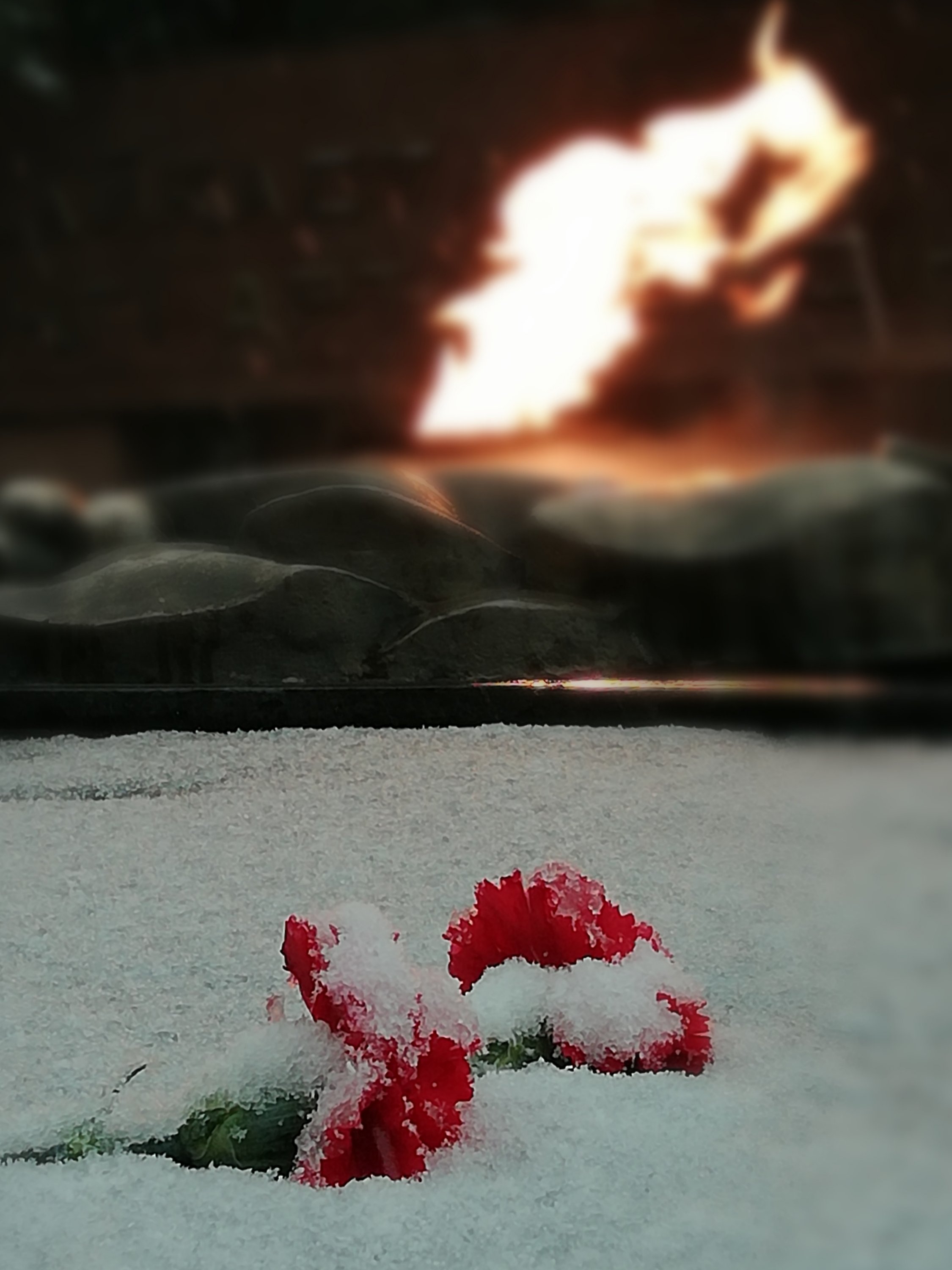
Talking of landmark sights, we also visited Panfilov Park, which is home to the Ascension Cathedral, a Russian Orthodox church. Impressively, it is the second tallest wooden church in the world, still standing: the towers looming in the pelting snow. It is now being refurbished, so unfortunately we couldn’t visit this one attraction either, but it was worth coming to the park and seeing the colorful church from the outside. Nearby, a large memorial dedicated to the Kazakh soldiers defending Moscow during WW2 is perched over an eternal fire crackling and raging through the weather.

My early impressions of Kazakhstan, however, weren’t great and only changed once in Almaty.

As I mentioned in my previous post, (https://beyondoverton.com/2018/10/26/uzbekistan-golden-teeth-and-neon-signs-2/) we first entered Kazakhstan through the Caspian Sea before driving into Uzbekistan. We had befriended a Kazakh on the ferry who offered us a ride to Beyneu on his bus. Later on, he asked my dad to lend him money for the petrol, promising he would return it (spoiler alert : he lied). In the end, he claimed the money was his fee for giving us a bus ride to Beyneu. I was frustrated – this person had lied and cheated us and we couldn’t do anything about it.

Another ‘school of life’ situation (as my mum likes to call them), happened while waiting for our train. We had set out for a restaurant close to the station and finally found one. All was well until half an hour later. A man had too much to drink and started stumbling around the restaurant, smashing windows and fighting with his friend. Well, that was interesting, to say the least.

Those experiences were not repeated the second time we entered Kazakhstan. Already at our arrival at Almaty’s train station, we were met by a friend of a friend, who owned a truck transportation business shipping things from China into Central Asia. He kindly offered to organise our Chinese border crossing – which we were extremely grateful for (otherwise, we would have had to take (again!) an overnight train).

In addition, later on, another friend of a friend showed us around Almaty’s surroundings (he brought us to the ice-skating rink) and introduced us to horse milk and camel milk. I found them both a bit too sour for my taste.

Overall, I really liked Almaty (full of amazing cafes and restaurants – with WiFi!). It’s third on my list of favourite cities, after Baku and Batumi.

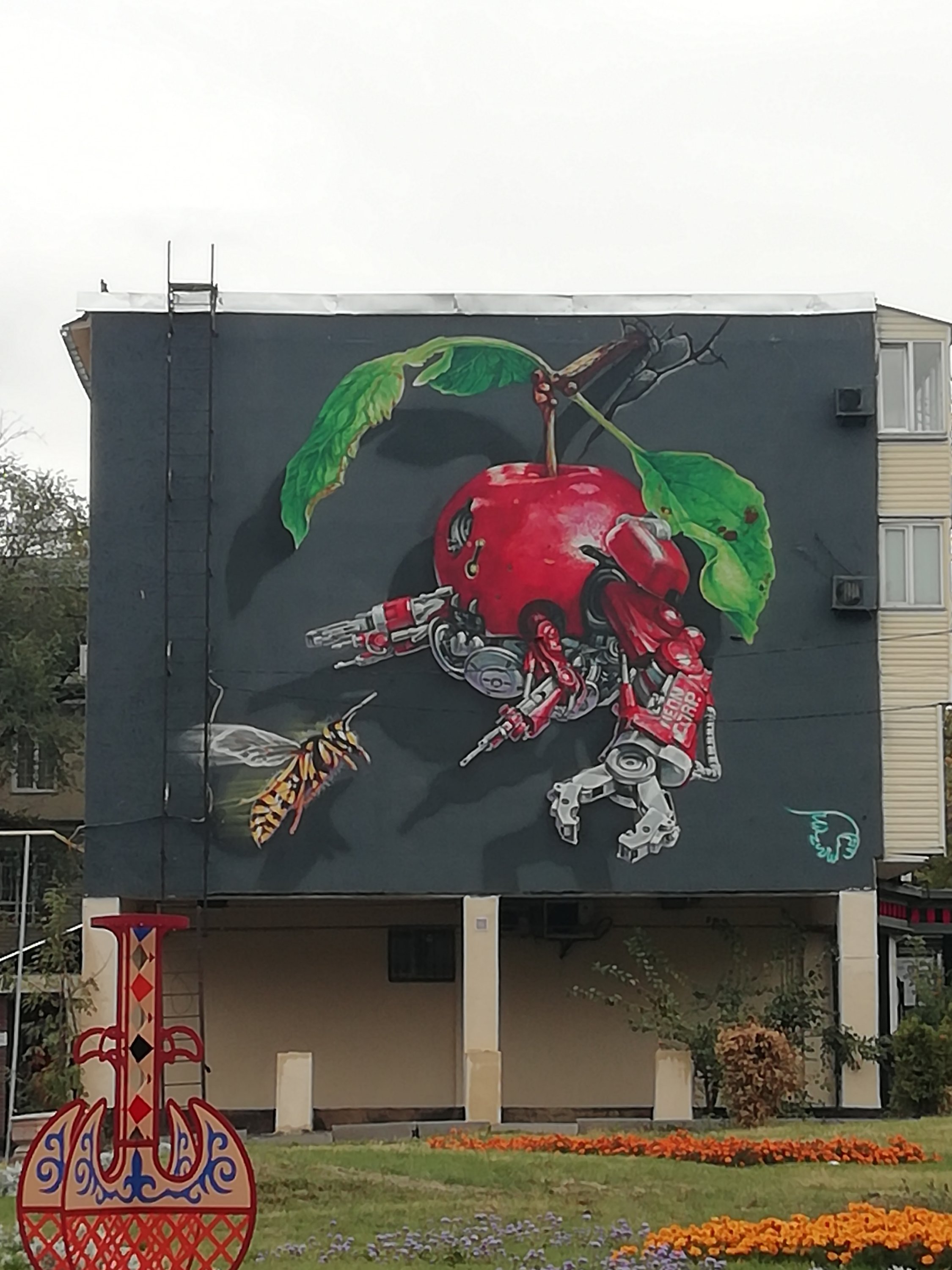
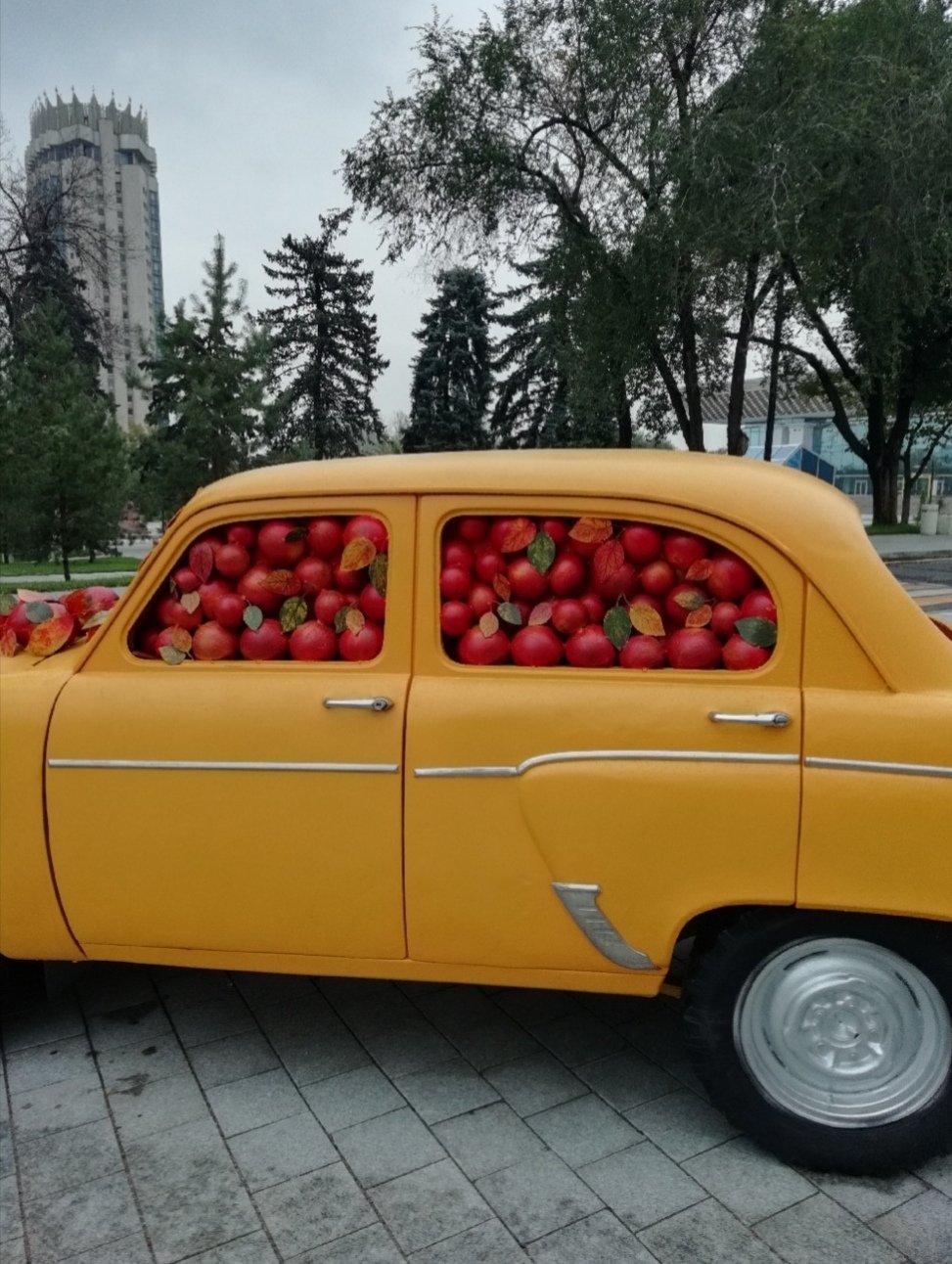
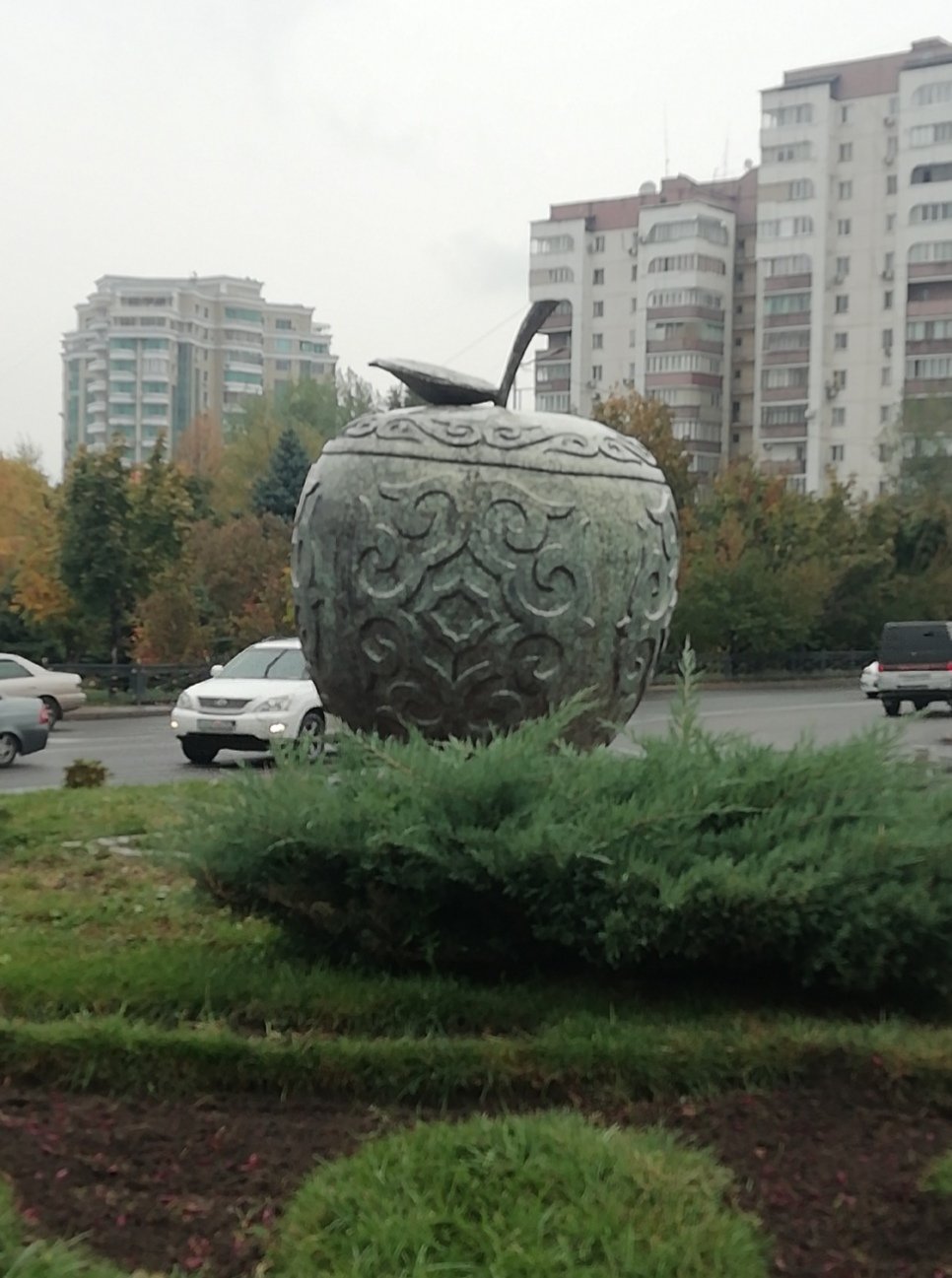
Trees of a specific fruit are grown all around the city which is why Almaty means ‘father of…’ See if you can guess which fruit it is.

That’s right. Oranges.

Oh my bad. I meant apples.

Silk Road (7): Free-roaming camels and wild horses

Tags

,

A note for clarity:

I set up this blog as a diary for my thoughts on the financial markets about a year ago. As we embarked on our Silk Road journey, my son wanted to share his travel experiences and I allowed him to use beyondoverton.com.

So now, you may have noticed that there are two entries per each country we have visited: my perspective (beyondoverton) and his (g88kboy). Additionally, because of the lack of reliable internet connections in most countries and our (Georgia and I, not necessarily the kids) desire to experience the real life as much as possible, our country posts come with delay. For example, I am about to post on Kazakhstan but we have been in China for almost a month already.

Connectivity being the issue has also meant that some posts have appeared in strange writing style – I don’t know why – could be because we upload from our mobile phones. It is for this reason that there are very few photos, in general. We have thousands, but uploading photos takes forever.

I have been also posting general footnotes on the journey, from time to time, with the latest being on China. That may increase the confusion as the timeline now, with this Kazakhstan post, seems to have been ‘broken’. A proper post on China will come soon!)

——————————————————————————–

We entered Kazakhstan twice. The first time when we crossed the Caspian Sea from Azerbaijan, and the second time, after Uzbekistan. The fact that we do not need visa to enter helped substantially in organizing our trip that way (all the visas we had to get so far for the other countries have been single entry only).

The two entries were also totally different experiences. During the first, we literally got taken for a ride by a local, whom we met on the boat from Baku. During the second, we met some of the nicest people (thanks to a good friend of mine: Nurik, if you are reading – a whole lot of gratitude) who not only showed us Almaty from a local point of view but also helped us cross the border into China!

We did neither know how to get from the port of entry on the Caspian Sea to the nearest town, Atyrau, nor really how to go to the border of Uzbekistan from there (about 6h drive). We thought we were in luck when one of the drivers on the boat from Azerbaijan, Mohammed, offered to take us to Beyneu, one hour away from the border. He had been to Georgia where he had bought a bus and was driving it back to his home in Aktau.

By the time we managed to get through passport control, and after waiting for a few hours for Mohammed to pass through customs with his bus, it had already become 10pm. I had checked that there was a train from Beyneu to Nukus, Uzbekistan at 4 am, so I thought, “Perfect timing”.

The bus driver had already agreed to take an American solo traveller, Michael, and a few of the locals along. At the last barrier before exiting the border area, the officers, for some reason, did not let us through. Mohammed turned around and asked me if he could borrow $30 (he said he had no cash) equivalent in Tenge, the local currency, because he had forgotten to pay for some document. It was lucky that I had exchanged that much money as, normally, exchange rates at borders are the worst.

It turned out, that he did not have the license to drive this bus (I have no idea how he had driven it so far!). I don’t know what the money I gave him was for, or how they let us through but now we needed to find someone else to drive the bus once in Atyrau, which meant that we could not go to Beyneu immediately.

We picked up more locals on the way, one of whom was kind enough to direct us as there did not seem to be a proper road for probably something like 10-15 km.

A small diversion here. This was a brand new port, which had opened literally two weeks ago. The facilities were excellent. Nothing compared to what they were in Azerbaijan and more like any modern European port of entry.

We stopped at a petrol station and the driver asked each of the locals to contribute some money for him to fill up the tank. That’s when I started to get suspicious; but still, he was a devout Muslim – he wouldn’t be a cheat and a liar, would he?

We were in Atyrau by midnight. We stopped at a parking lot just outside of town where all the locals disembarked and we waited for two people, one of whom was the new driver, the other, a friend of Mohammed. There was a new problem: they needed to arrange insurance, and, of course, that could not be done in the middle of the night. So, we needed to find a place to sleep…and somewhere to exchange money to pay for it.

Mohammed’s friend managed to arrange a flat for $40 for the night for all of us (including Michael) and I got in his car with him to find some Tenge and pick up the keys. (Everyone else stayed in that parking lot to wait for us).

When I look at this whole experience in hindsight, it seems surreal. I had no idea who these people were, we had just arrived in a foreign country in the middle of the night, I had left my family on a deserted parking lot and embarked on a trip across town with a stranger looking for a flat to sleep in and a place where to exchange money!

This guy was huge, a former Kazakhstan bench weight lifting champion…and he turned out to be super nice. If I had any fears, they quickly disappeared once I got talking to him in the car (by the way, unlike the other former Soviet Republics we passed through, Kazakh people not only speak perfect Russian but are also happy to).

He obviously knew his way around town. We stopped first in a secluded alley, where the ‘exchange bureau’ was an iron door with a small opening in the middle where you handed your dollars and hoped you would get some Tenge back. Then we drove to a really dilapidated block of old Soviet-style flats where a lady handed us the keys (she insisted on keeping my passport for ‘deposit’ but eventually settled for 2,000 Tenge – about $5).

The bizarre did not finish there. We picked up the family and Michael from the parking lot and drove to a brand new, very modern, but half-built ‘skyscraper’ on the Caspian Sea waterfront, where, I think, no flats were inhabited. The fact that there was a guard at the door who looked at us worryingly and warned he would call the police confirmed my suspicion (he did not).

The following morning, we got on the bus again and we left for the border town. I began to wonder whether I would ever get our money back. It was not so much for the actual money but a question of trust. Moreover, we had run out of Tenge and I was still relying on the money we were owed.

At our first stop we needed to buy water and I asked Mohammed when he was planning to give us the money back. He laughed back at me and said something like, “You were not thinking you were getting a ride for free, were you!?” Of course we were! The bus was going empty in our direction anyhow, and he had never mentioned money. His reply was, “Sorry, I must have forgotten to tell you, I expect you to pay for taking you to Beyneu”.

The situation became hilarious when, half way, we stopped at another petrol station and he asked to ‘borrow’ more money under another pledge that he would give it back. We were shocked after our previous exchange. Did he really think that we would trust him again?

Eventually, we got dropped off at the Beyneu train station but with a sour taste in our mouth.

Incidentally, while this drama was going on in the bus, the scenery outside was a vast steppe (most of it, hundreds of meters below sea level) where camels and wild horses were roaming free.  The other thing I noticed was, once past the Caspian Sea, people start to look much more Asian. In any of the countries so far on our trip, I could have possibly passed as a local. No such chance here.

We arrived in Almaty on the train from Tashkent. Almaty was really special: the unusually cold (below freezing, snowing) weather was contrasted with the amazing warmth of the people we met there. Nurik, my friend from University, who is also originally from Almaty but lives in London, put us in touch with his friends, Max and Daniar.

Max waited for us at the Almatyi train station, helped us to exchange money and get a SIM card and eventually took us to our rented flat. He was pretty much ‘on call’ all the time we were there with suggestions what to do and where to eat. And of course he organized our trip to the Chinese border.

Daniar took us for lunch where we tried some Kazakh delicatessen, among which camel and horse milk. Afterwards, he showed us Medeu, the most popular ski resort in Central Asia, just half an hour drive from Central Almaty.

Otherwise, the weather was totally ‘uncooperative’: miserably cold. We had planned our trip with the idea to avoid the coming winter in Central Asia/China, both as it is less pleasant to travel from place to place, backpackers’ style, when it is cold, and for practical reasons (fewer things to carry).

Georgia and my son had already bought winter jackets in Uzbekistan, and now literally the first thing we did in Almaty was buy hats and gloves in a mall. Then we went to the ‘Green Bazaar’ and bought these special waterproof ‘socks’ which go on top of the normal socks (we brought only one pair of shoes with us on this journey, the special Vivo Bare Foot, which had served us extraordinarily well so far, but were no match for the slush and snow in Almaty). And then we bought camel-hair and bamboo socks to keep warm. Finally, we still wore pretty much every single piece of clothing we had brought with us – this is how big the shock to the system was the cold we encountered in Almaty!

The upside of the bad weather was that we spent some time in Almaty wonderful cafes (I was very happy that I was finally able to drink some proper coffee!), restaurants (we had amazing Korean – it turns out that Almaty has a large Korean diaspora stretching all the way to the 1930s – the first mass transfer of an entire nationality!) and, of course, Bania Arasan (the Arasan Baths). This latter was heaven for Georgia and my son; I and my daughter, on the other hand, were just fine.

Arasan Baths were finished only in 1982 and are a typical example of Soviet modernist architecture. Rumor is that they were built to compete with the oriental baths in Tashkent (we did not see the latter because they were demolished a few years ago). Inside, the baths are not only really exquisite – a blend of oriental and modernist style architecture and materials; but they are also quite practical – everything was designed with a specific task in mind. Men and women bathe separately but, apparently, the two sides are exactly symmetrical. The choices are Russian Bania, Finnish sauna and Turkish steam room with the temperature in each decreasing in that order (if you are a first timer, like me, you would not
be able to stay more than a minute in the Russian Bania – it is that hot!).

We had chosen the rental flat right next to both the Arasan Baths and the Panfilovets’ Park the other must-see attraction in Almaty. The park is named and dedicated to the 28 soldiers of an Almaty infantry unit who died fighting the Nazis outside Moscow. We had to visit it despite the extreme cold. It was definitely worth it as the memorial is really magnificent.

On our last day we left Almaty very early in the morning for our drive to the Chinese border. Max came to pick us up from the flat (he gave us a few of the city’s famous apples for the road!) and then one of his drivers took us to the border.

The scenery was very much as I remembered it on our first encounter
with Kazakhstan in the east: steppes with wild horses (did not see camels;
don’t know if it was because it was so cold).

The difference was that this time the land was covered with snow, and with the majestic Tien-Shan mountains in the distance, it looked like a scene from one of those Russian ‘skazkis’ (stories) I had read as a child.

The border! Again! It all started well. We got dropped off where the car could go no further, picked up by one of Max’s people and taken, like VIPs, to the Kazakh border control. The appearance of a family on a deserted border crossing so far had caused some commotion and excitement. Here, though, it caused also some suspicion.

That was probably caused by my son mentioning he was from Italy while handing his British passport to the border officer, and my Eastern European name (and looks). Not only, it took the border officers an usually long time to process our documents (especially the kids’), but also, after passing through, we were separately, and casually, asked few questions (to the kids, what is the name of their mother; to Georgia, what is her name and to confirm her husband was from Ukraine!?!). We couldn’t
figure out if it was pure curious chit-chat from a group of bored officers or
digging deeper into our identities, but we thought it amusing.

The actual problem was what happened after we finally cleared the Kazakh border control. We started walking towards the Chinese side, when we were stopped by a screaming loudspeaker and asked to return back: apparently, you are not allowed to simply walk in no man’s land to the Chinese border – you have to be ‘transported’ there.

The issue was that the only transportation is a public bus, that not only arrives from time to time (no one knows when) but you need Tenge to pay for it (the same rate as if you had picked it up from the departure point), and we had not kept any.

We found ourselves in a bind. What do we do? Do we take our chances and wait for the bus? What if it is full? Would the driver take dollars instead of Tenge? Do we go back in Kazakhstan and attempt to board that bus at its starting point?

We decided to wait. Eventually, the Kazakh border officers warmed up and we started talking (I think they were bored – no one passed through the three hours we waited for that bus!). One of them promised he would talk to the driver and make sure he would take us on board, and for free! It was indeed a relief when the bus eventually arrived with enough spaces for us to board and cross into China. However, not before waiting for an hour, in the bus, while the Chinese border was closed for lunch break!